Get Full Government Meeting Transcripts, Videos, & Alerts Forever!
Get email alerts on the Subpoena Power Isps topic
No spam. Unsubscribe anytime.
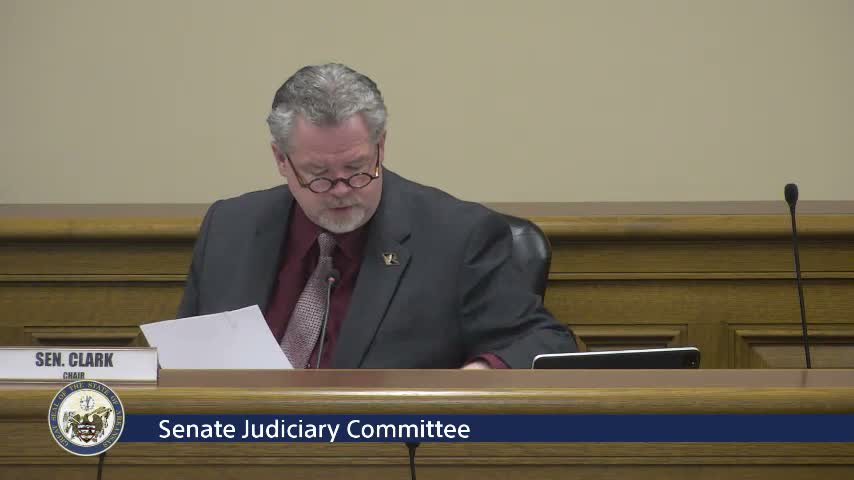
Senate committee approves subpoena power for ISPs in child‑exploitation probes; members press Fourth Amendment limits
Summary
Senate Bill 256 would let Arkansas State Police issue administrative subpoenas to Internet service providers to identify the subscriber tied to an IP address in investigations of internet crimes against minors; supporters said subpoenas would request identifying information (name/address), not content, but committee members sought safeguards tied to Fourth Amendment protections and limits on scope and use.
Senator Missy Irvin introduced Senate Bill 256 and described the measure as requested by the Arkansas State Police. Captain Stacy Rhodes, assigned to the Internet Crimes Against Children task force, explained how current practice requires law enforcement to seek a search warrant or consult a local prosecutor to resolve an IP address to a subscriber — steps that can create delays when time is critical in child‑abduction or trafficking cases.
Rhodes said the bill would give the state police authority to issue an administrative subpoena to an Internet service provider to obtain subscriber identifying information (for example, name and address) associated with an IP address; she repeatedly emphasized the subpoena would not collect content and would be narrowly limited to crimes against minors. Rhodes compared the information sought to a simple parcel lookup on a county assessor site and told the committee that about 20 other states use similar administrative subpoena authority for this purpose.
Committee members asked detailed constitutional questions. Senator Johnson asked whether further information would still require a warrant; Rhodes answered that additional content would require a warrant and that the administrative subpoena is a limited tool to establish where to start an investigation. Senator Ballinger and others raised concerns about Fourth Amendment protections and the language in the bill that lists more identifying markers and includes a broad "including without limitation" clause; Ballinger asked whether such provisions have been tested and upheld in court. Rhodes said she was not aware of a court decision directly upholding the statute and agreed the authority should be used narrowly and in emergency circumstances.
Senator Irvin and Captain Rhodes both said the subpoenas would be issued through a single channel at the director's office and that use would be monitored. The chair and other members asked whether a subpoena would be a written document (the committee confirmed it would), and Rhodes said the subpoenas would create a record of the request.
After questioning, the committee moved and passed SB256 by voice vote.