Get Full Government Meeting Transcripts, Videos, & Alerts Forever!
Get email alerts on the Victim Testing Grant Conditions topic
No spam. Unsubscribe anytime.
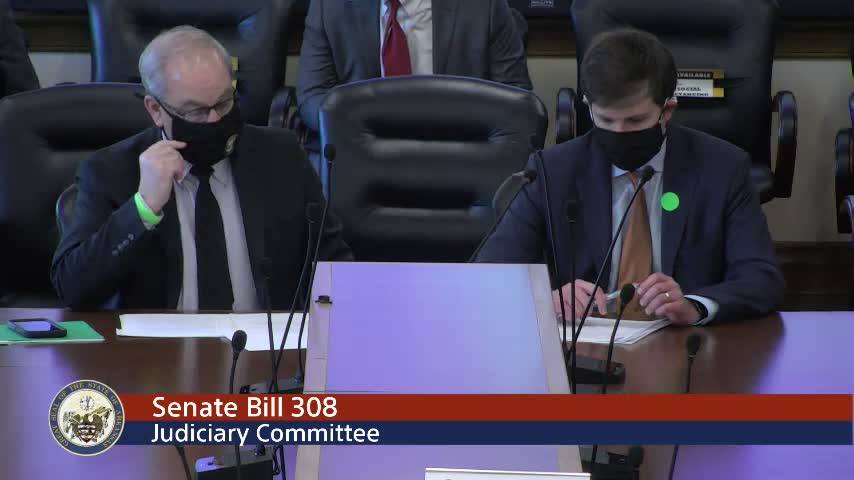
Sponsor to rewrite HIV‑testing provision after defense counsel raises legal concerns
Summary
A bill change required by a Department of Justice grant would let a victim request an HIV test of a charged defendant within 48 hours of information/indictment; defense counsel warned it removes judicial discretion and risks irrelevant collection of health data. Sponsor agreed to work with opponents and return next week.
Senator Hammer and Will Gruber told the Judiciary Committee the measure stems from federal grant language: unless state law allows a victim to request that a defendant be tested for HIV "not later than 48 hours" after information or indictment, the jurisdiction risks losing 5 percent of certain DOJ grant funds. Gruber said the grant at issue is worth roughly $933,000; without the statutory change the county would lose about $46,000 of that award.
Gruber said the existing statute already allows prosecutors to request such testing in cases where "reasonable cause to believe" an offense occurred, but the grant language requires that the victim also be able to request it. "We are notified that if we didn't change the existing law ... we wouldn't be eligible to receive all the funds," he said.
Jeff Rosenthal of the Arkansas Association of Criminal Defense Lawyers urged revisions. He said the bill would strip judicial discretion by allowing an accuser (he recommended the statutory language read "accuser" not "victim")—who has not been adjudicated—to require a judge to order testing. "This would take the power away from the court and the control of the court and place it ... in the hands of the accuser," Rosenthal said, and warned that the provision is overbroad in covering cases that do not involve force or where the defendant is charged only as an accomplice.
Committee members questioned the medical timing: several senators noted post‑exposure prophylaxis (PEP) can be effective when started shortly after exposure and asked whether the 48‑hour window serves that medical need. Sponsors said they were relying on federal grant language, that prosecutors retain the ability under current law to seek testing, and that they were willing to work with opponents on amendments.
Senator Hammer offered to meet with critics and return next week with proposed language or amendments; the committee agreed to hold the bill for further work.