Get Full Government Meeting Transcripts, Videos, & Alerts Forever!
Get email alerts on the Custody Reform topic
No spam. Unsubscribe anytime.
Senate Judiciary Committee advances custody bill that raises rebuttal standard to clear and convincing evidence
Summary
The Senate Judiciary Committee on Wednesday advanced Senate Bill 18, which would make joint custody the presumptive starting point and require clear-and-convincing evidence to rebut that presumption. Judges and the Arkansas Bar warned the higher standard could limit courts’ discretion and increase litigation; the committee approved the measure 7–1 on a roll-call vote.
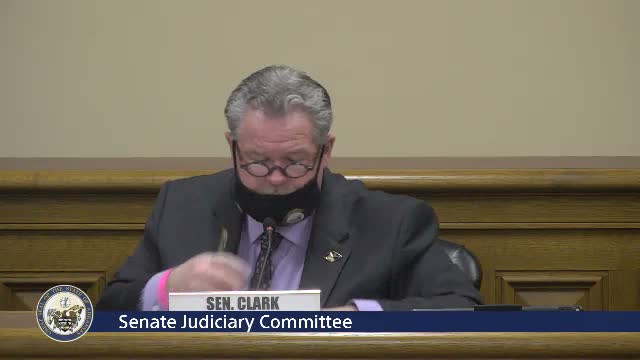
Senator Clark persuaded the Senate Judiciary Committee to advance a contentious custody-reform bill that would make joint custody the presumptive starting point in divorce and custody proceedings and require that a party rebut that presumption only by clear and convincing evidence.
The measure, Senate Bill 18, was presented by Senator Clark, who said the change is intended to reinforce the role of fathers and make joint custody the statutory norm. "Children need both their parents," Clark told the committee, saying the 2013 statute did not go far enough. "The only way to correct case law is through actual law," he said.
Opponents warned the bill would alter long-standing practice and raise the burden of proof in domestic relations cases from the usual preponderance standard to a heightened "clear and convincing" level. Judge Ham Singleton, president of the Arkansas Judicial Council, told the committee that the proposed shift "is too high a bar" and would be especially difficult for self‑represented litigants and many lawyers to meet.
Angela Mann, representing the Arkansas Bar Association, elaborated on practical concerns: a presumption of joint custody, she said, "assumes that joint custody is in the best interest without any evidence whatsoever" and would shift focus away from the child's welfare. Mann warned the bill would require more expert evaluations and could increase litigation and costs.
Supporters, including Senator Clark and several senators who spoke in favor, said the change clarifies legislative intent and encourages parental responsibility. Senator Johnson argued that presuming shared responsibility could incentivize better parenting.
Several committee members pressed witnesses on particulars: whether the court would retain the ability to review party agreements, how courts would evaluate claims that parenting time would "seriously endanger" a child, and how the proposed standard would interact with existing presumptions about domestic abuse or registry status. Judicial witnesses and the Bar urged amendments to preserve court review and to avoid creating inconsistent evidentiary standards across related statutes.
After extended testimony and debate, the committee voted to advance the bill as amended. A recorded roll-call showed the motion carried 7–1: Stubblefield (Aye), Rice (Aye), Blake Johnson (Aye), Garner (Yea), Ballenger (Yes), Flowers (No), Clark (Yes).
Next steps: SB18 moves to the Senate floor for further consideration and possible amendments. The committee record contains extensive testimony from judges and the Arkansas Bar raising legal and practical issues the full Senate may address.