Get Full Government Meeting Transcripts, Videos, & Alerts Forever!
Get email alerts on the Asset Forfeiture topic
No spam. Unsubscribe anytime.
Senate Judiciary hearing spotlights small‑value forfeitures and a widow’s loss; lawmakers press for procedural fixes
Summary
Lawmakers heard testimony Dec. 18 that most Arkansas forfeitures are small (median ≈ $1,045) and that procedural rules — including a notarized ‘verified answer’ requirement and low thresholds for pursuit — contribute to defaults. A 78‑year‑old witness told the committee she lost a 1969 Bronco and other property after a relative’s arrest.
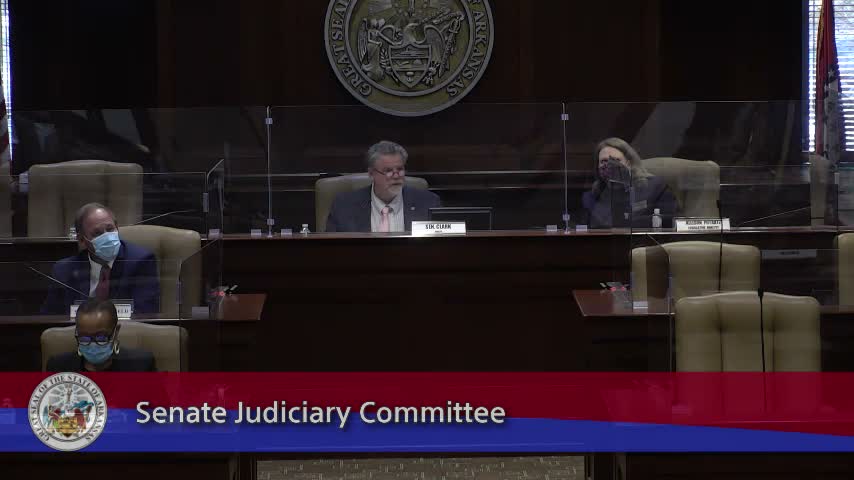
The Senate Judiciary Committee on Dec. 18 heard detailed testimony about civil asset forfeiture in Arkansas, including data showing most seizures are small and a first‑hand account from a Hot Springs widow who says she lost several items of personal property after her son’s arrest.
Lee McGrath, speaking to the panel, distinguished seizures (possession by police) from forfeiture (a judicial process overseen by prosecutors and judges) and said Arkansas has forfeited roughly $153 million over about 19 years, with about $46 million returned to state agencies through federal equitable‑sharing programs. McGrath said the median currency seizure in the state is about $1,045 and that roughly three‑quarters of cash seizures are under $2,500.
“Seizure is the work of police; forfeiture is litigation by prosecutors,” McGrath told senators, and he urged the committee to consider reforms that reduce burdens on innocent owners and blunt any financial incentive for agencies to pursue property. He identified several reform options including raising the standard the government must meet to overcome an innocent‑owner claim, flipping the burden to the government in some cases, prompt post‑seizure hearings, and dollar thresholds below which property is not pursued.
The committee also heard a concrete example from attorney Sylvester Smith and his client Patricia Tackett. Tackett, 78, testified that after her son was arrested on drug allegations agents took a 1969 Ford Bronco, a camper and two boats from property she owns. She said she completed paperwork that she believed would secure the return of her property but later learned the statute requires a ‘‘verified’’ answer — interpreted by courts as requiring a notarized, sworn filing — and that a prosecutor moved for default judgment when her unsigned answer did not meet that technical standard.
“I thought I was just getting, you know, telling them it was my stuff and that I wanted it back,” Tackett said. She told the committee she had titles and bills of sale and could not afford counsel to litigate the matter.
Prosecutor Bob McMahon, the state’s prosecutor coordinator, said prosecutors helped craft Act 476 (the 2019 law sometimes described as Senate Bill 308) to provide a conviction prerequisite for forfeiture in many circumstances and that forfeiture is a legitimate tool to dismantle criminal enterprises. McMahon also confirmed that confiscation reports are filed after seizures and that judges must ultimately sign forfeiture orders.
Committee members pressed witnesses on how innocent owners can be protected from losing property they did not knowingly authorize for criminal use. McGrath told the committee that defaults occur in a majority of civil forfeiture cases because the cost of hiring counsel often exceeds the value of the property seized; he and other witnesses cited a national typical attorney cost of about $3,000 to defend a civil forfeiture claim.
Lawmakers raised specific procedural targets: several senators asked whether the ‘‘verified answer’’ requirement should be eased so lay owners are not removed from the process by a notarization technicality, whether a higher standard (for example, requiring both knowledge and consent) should govern innocent‑owner claims, and whether small‑value seizures should be excluded from civil litigation altogether. McGrath and Smith urged clearer notice and simpler procedural paths that let owners assert title without unintended forfeiture.
The committee did not vote on legislation at the hearing. Members said they would consider bills during the upcoming session and asked prosecutors and AOC staff to provide additional data — including whether confiscation reports include demographic identifiers — to assess disparities and the scope of the problem.
Next steps: the committee requested follow‑up information about confiscation report fields and said members would consider statutory fixes such as changing verification requirements, clarifying the innocent‑owner standard, and establishing value thresholds to limit enforcement in low‑value cases.