Get Full Government Meeting Transcripts, Videos, & Alerts Forever!
Get email alerts on the Child Welfare Reform topic
No spam. Unsubscribe anytime.
Georgia judges tell Arkansas committee that presuming unsupervised —family time— and open juvenile courts speed reunification
Summary
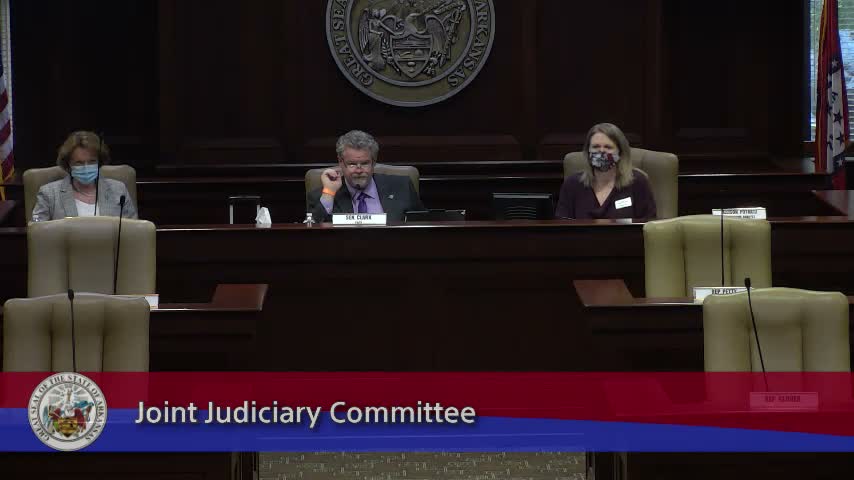
Two retired Georgia juvenile judges told the Arkansas Senate Judiciary Committee that Georgia's multi-year juvenile-code revisions'including a presumption of unsupervised parental family time and —open courts—'have helped identify placement resources, increase reunifications and focus resources, while requiring judicial education and protections for privacy and domestic-violence cases.
Two retired Georgia juvenile judges told the Arkansas Senate Judiciary Committee on Monday that Georgia's overhaul of its juvenile code, which includes a presumption of unsupervised parental —family time— and a move to open juvenile court hearings, sped reunification for many families and helped surface relatives and community supports earlier in cases.
Judge Peggy Walker and Judge Diana Johnson described a multi-year, statewide revision process that rewrote statutes, recruited an expert —brain trust— of academics and practitioners to draft changes, and built champions among judges and legislators to sustain reforms. Walker said the effort aligned state statutes with evidence-based enhanced resource and juvenile-justice guidelines so courts could apply child-development science to practice.
—We brought in the research and we translated it into practice,— Walker said, describing training, iterative —cleanup— amendments after enactment and a year of legislative-authorized preparatory training before implementation.
Johnson framed the presumption of unsupervised visitation as a question courts must ask at early hearings rather than a default restriction. She said the Georgia statute often requires a visitation order at the first probable-cause or 72-hour hearing so families are no longer left weeks without formalized contact.
—Frequent, meaningful visits maintain and enhance the parental bond,— Johnson said. —When parents are appropriately connected, reunification happens faster.—
Department and parent-counsel representatives told the committee those changes yielded practical benefits. Mishia Martin, director of the Arkansas Division of Children and Family Services, said many foster placements arise from parental substance use and that unsupervised contact, when safety allows, supports parent recovery and child bonding. Glenn Hoggard, who represents parents under contract to the state, described local examples where increasing visit time produced both earlier successes and, in some cases, quicker identification of parents who could not or would not meet case-plan expectations.
The judges also promoted open juvenile courts as a mechanism for surfacing extended family or community resources early in dependency cases. They said allowing public attendance for many dependency and specified delinquency hearings helped identify potential kinship placements, volunteers and community supports that might otherwise remain unknown until much later in a case.
—One of the most significant things is seeing extended family in the gallery at that first 72-hour hearing,— Walker said, noting cases in which grandparents or other relatives volunteered to provide daily support such as school transportation and thereby spared children an additional trauma.
Presenters acknowledged risks and limits. They described statutory exceptions and judicial discretion to close hearings for first-time delinquency matters, serious criminal allegations, privacy or safety concerns (for example, domestic violence), and said a written order is required when a court closes proceedings. The judges said child attorneys can move to close a court to protect a child's privacy and that courts have used protective orders and other measures where public attendance could cause harm.
Committee members asked about stigma in small communities and the effect of social media. The judges said courts have tools to protect privacy and that programs such as West Virginia's Handle With Care (an alert to schools that a child needs trauma-sensitive support without disclosing details) can help schools and service providers respond without publicly stigmatizing a child.
Both judges emphasized judicial and legal education as a condition of success. They described Georgia programs that use court-improvement funds and national memberships to provide scholarships and specialized training for judges and child-welfare attorneys, including a certified Child Welfare Law Specialist track that raises the level of representation and accountability.
The judges invited Arkansas officials and legislators to follow up and offered contact information for further questions. The presentation concluded with committee discussion of implementation trade-offs and the importance of training and data-driven court-improvement work.
What happens next: the committee did not vote on legislation during the session. Presenters urged careful use of court-improvement funding, judicial education, and stakeholder-driven drafting if Arkansas pursues similar reforms.