Get Full Government Meeting Transcripts, Videos, & Alerts Forever!
Get email alerts on the Judicial Recusal topic
No spam. Unsubscribe anytime.
Recusal and retired-judge limits bill fails after contested hearing; vote later expunged
Summary
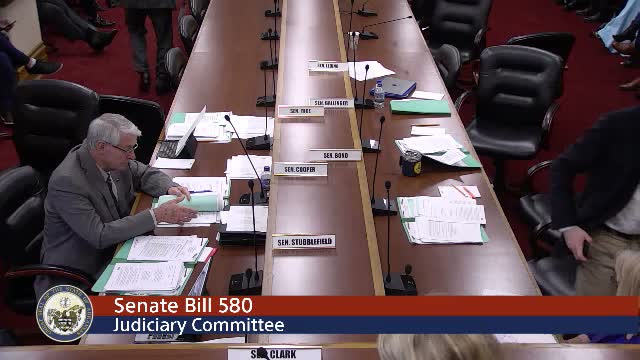
Senator Stubblefield's bill to limit assignments and compensation for retired judges and to require hearings on recusal motions drew extensive testimony from citizens alleging case-specific harms and opposition from the judicial community; the bill failed on a roll call and the committee later voted to expunge that failing vote.
Senator Stubblefield presented a bill addressing recusal procedure and placing limits on the compensation/per-diem for retired judges who serve by special appointment; the measure also would require a hearing on a formal recusal motion by a party to pending litigation.
Multiple private citizens testified about long-running court cases and problems they attributed to a particular retired judge, describing long delays and what they characterized as poor case management; witnesses urged limits on extended retired-judge assignments and continuing education. Senator Stubblefield said the bill was intended to "shed some light" on perceived problems and provide additional recourse for litigants.
Judicial representatives, including circuit judges speaking for the judicial council, opposed the measure as drafted. Judge Tom Smith and Judge Ham Singleton said existing recusal procedures and the Judicial Discipline and Disability Commission already provide oversight and that blanket limits on retired-judge service would hamper the courts' ability to assign experienced judges for special cases (especially in single-judge districts). They cautioned the bill's language was overly broad and could make it difficult to find qualified judges for special assignment.
Committee debate touched on access to appeals and the real-world limits litigants face in pursuing appeals. In a roll-call vote the bill failed; after further discussion Senator Flowers moved to expunge the failing vote and the committee approved the expungement by voice vote.