Get Full Government Meeting Transcripts, Videos, & Alerts Forever!
Get email alerts on the Temporary Guardianship topic
No spam. Unsubscribe anytime.
Committee adopts temporary-guardianship changes after debate on child protections
Summary
SB625, amending temporary guardianship rules to permit notarized parental statements attested by two witnesses and shortening the initial temporary guardianship to 45 days, passed after debate over notice, bonding and risks to children; opponents urged caution about bypassing probate safeguards.
Senator Ballinger presented SB625 and an amendment that clarified who may be named as a temporary guardian, added a requirement for two witnesses to attest to the parents' written statement (akin to a will-style attestation) and shortened the initial temporary guardianship period to 45 days. Ballinger said the bill fills a gap when parents die and immediate care is needed: "The gap ... is if me and my wife pass away ... my son will be the ward ... so for a period of time before he's able to get counsel and petition the court, then ... my kids would essentially go without any kind of guardianship," he said.
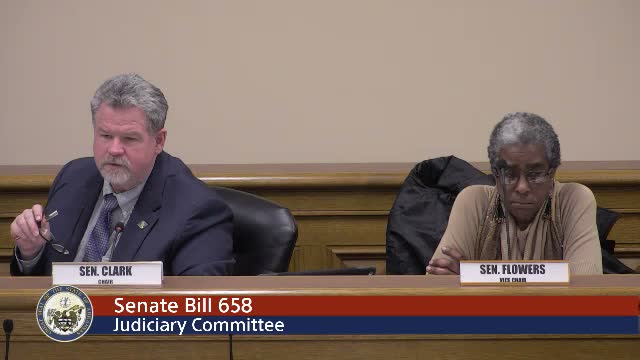
Senator Flowers and other members raised multiple concerns about notice, bonds, whether the instrument applies to the person or estate of a minor, and the risk of an "interloper" taking control of a child's estate without court supervision. Flowers said a will and probate process can accomplish similar goals and cautioned that the bill could put children and the state at risk. Ballinger countered that the statutory gap was real and the bill included witness protections and a limited time window.
After debate and amendment adoption the committee passed SB625 by voice vote. Opponents urged careful follow-up to ensure protections (notice, bond, clarity on estate authority) are preserved in implementation and in court practice.