Get Full Government Meeting Transcripts, Videos, & Alerts Forever!
Get email alerts on the Custodial Recordings topic
No spam. Unsubscribe anytime.
Committee hears testimony on mandatory custodial-interview recordings; bill pulled for revision
Summary
Senate Bill 580 would require audio/visual recording of custodial interviews; Arkansas State Police and prosecutors said audio recording is common but universal video is costly and impractical in many rural agencies; committee agreed to pull the bill so sponsors can amend language ("video if available," waivers, storage/retention provisions).
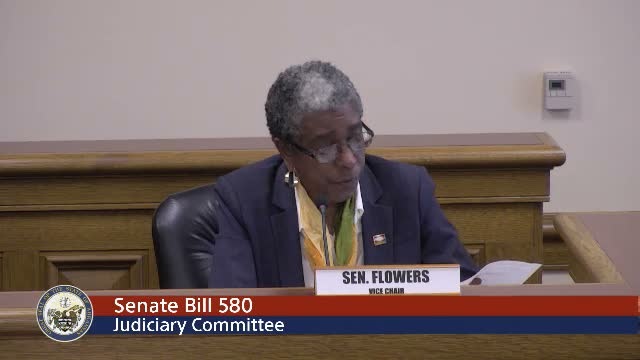
Senate Bill 580, introduced by Senator Clark, would require the audio and visual recording of custodial interviews and interrogations. The sponsor said the proposal is intended to create a consistent record and protect the integrity of testimonial evidence.
Arkansas State Police Director Bill Bridal and Major Mark Hollingsworth told the committee that the department routinely audio-records interviews and, wherever practical, records video in facilities that have camera-equipped interview rooms. They warned that many rural sheriff and police departments lack video-equipped interview rooms, that equipping all facilities and creating storage capacity would be costly, and that the bill as drafted would become a funded mandate for many agencies. Major Hollingsworth explained that investigators often conduct interviews in the field (in cars or on porches) where video is not practical.
Prosecutor representatives (Bob McMahon and Daniel Shue) said they were not opposed in principle but raised legal concerns including separation of powers (court rules governing recordings, e.g., Rule 4.7) and operational concerns about recordings affecting ongoing investigative techniques (e.g., confidential narcotics cooperators). Committee members discussed possible fixes — making video required "if available," allowing audio when video is not available, preserving investigative discretion and a waiver process if a suspect declines to be recorded, and addressing equipment-failure contingencies and retention/storage timelines.
Given those practical and legal concerns, Senator Clark agreed to pull SB580 and work with law-enforcement and prosecutor stakeholders on drafted amendments addressing funding, video availability, investigative exceptions and retention requirements.