Get Full Government Meeting Transcripts, Videos, & Alerts Forever!
Get email alerts on the Family Property topic
No spam. Unsubscribe anytime.
Marital-property bill to restore active-appreciation doctrine fails after contested hearing
Summary
Representative Collins’ bill to classify value increases from time, effort or skill ("active appreciation") as marital property drew sharp debate over small-business impacts; the committee ultimately voted the bill down and suggested further work and possible amendments.
Representative Collins introduced House Bill 6086 to clarify that increases in value from time, effort or skill—so-called active appreciation—should be treated as marital property subject to equitable distribution. She said the proposal would restore a long-established Arkansas approach and provide clarity after recent court decisions.
Proponents argued the measure simply treats active appreciation like income and protects equitable outcomes in long marriages where one spouse’s labor contributed to growth. The sponsor noted judicial council support and consultations with family-law practitioners.
Opponents — including Sylvester Smith of the National Federation of Independent Business and other small-business advocates — warned the bill could force family businesses and farms with multi‑generation ownership to be sold to generate buyouts, and urged amendments to limit exposure. "This bill goes too far," Smith said, arguing that Moore v. Moore had properly narrowed courts’ reach and that the proposed language creates uncertainty for small business owners.
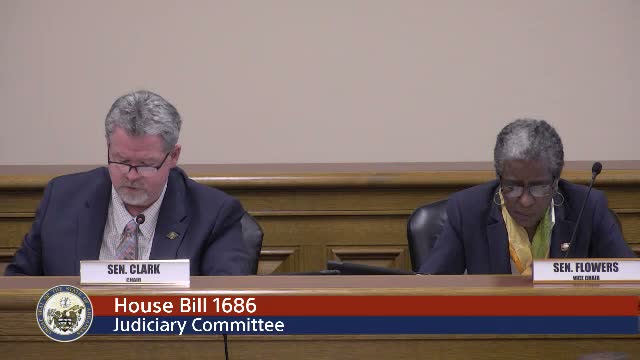
After sustained questioning and competing testimony, the committee held a voice vote; the chair determined the motion to pass failed. Senators requested additional drafting and recommended further committee consideration and a potential interim study to reconcile competing concerns.