Get Full Government Meeting Transcripts, Videos, & Alerts Forever!
Get email alerts on the Juvenile Justice topic
No spam. Unsubscribe anytime.
Panel amends juvenile‑interrogation bill after debate over parental presence and logistics
Summary
SB500, which would require minors to consult an attorney before waiving rights, was amended by the Judiciary Committee after debate between child‑rights advocates, prosecutors and judges; committee signaled willingness to narrow language to require parental presence in some cases.
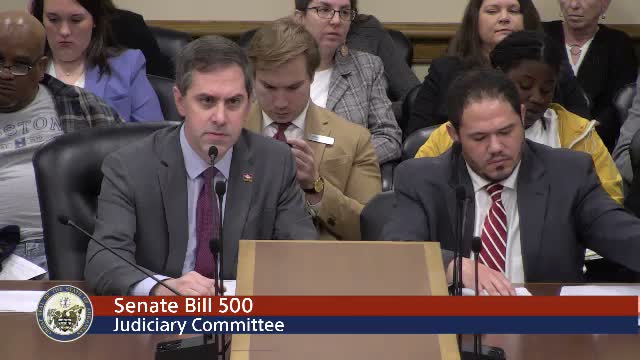
The Senate Judiciary Committee adopted an amendment to Senate Bill 500 and engaged in extended questioning over whether the bill should require counsel consultation for minors or instead mandate parental presence when juveniles are questioned.
Sponsor Senator Ledding and James Dole of Human Rights for Kids said the bill is intended to protect young people during custodial interrogations. Dole cited research on juvenile development and statistics drawn from national exoneration work that, he said, show high rates of false confessions among juveniles. The bill as presented would entitle minors (presented in testimony as "15 years of age or younger") to consult an attorney in person, by phone or by video before waiving constitutional rights, with a public‑safety exception.
Prosecutors and many juvenile court officials opposed the bill in its broad form. Laurie Campuris, deputy prosecutor coordinator, and Kyle Hunter, president of the Arkansas Prosecuting Attorneys Association, said existing juvenile procedures—parental presence in delinquency proceedings, statutory waiver rules and judicial review—already protect most juveniles, and that imposing a categorical counsel requirement could hamper criminal investigations and create logistical burdens for defense appointment at all hours.
Committee members questioned the accuracy and source of statistics cited by proponents. Greg Parrish of the Arkansas Public Defender Commission said he could not verify the numbers during the hearing but supported the policy aim of counsel access. Committee discussion focused on narrower alternatives: requiring counsel only when a juvenile faces adult charges, or adding mandatory parental presence in adult filings, to avoid creating immediate statewide appointment obligations for counsel at all hours.
Judge Stacy Zimmerman, a juvenile division circuit judge, told members that protections requiring parental presence apply in juvenile delinquency cases but historically do not carry over when prosecutors file juveniles as adults—leaving some 16‑year‑olds without the parental presence the juvenile code mandates for delinquency hearings. Members discussed an amendment to add a parental presence requirement and the sponsor agreed to consider inserting "parent" into line language with caveats about conflicted parents and jurisdictional complications.
The committee did not take a final floor vote on the amended bill in the hearing record; the sponsor agreed to refine language and consult with stakeholders.