Get Full Government Meeting Transcripts, Videos, & Alerts Forever!
Get email alerts on the Sentencing Reform topic
No spam. Unsubscribe anytime.
Committee rejects Elliott bill to retroactively adjust drug sentences but votes to draft governor resolution and consider interim study
Summary
Senator Elliott’s proposal to allow people sentenced under older, harsher drug statutes to petition courts for sentence adjustments failed in committee, but members directed staff to draft a senate resolution urging the governor and parole board to expedite review of commutation/parole applications and agreed to consider an interim study of affected cases.
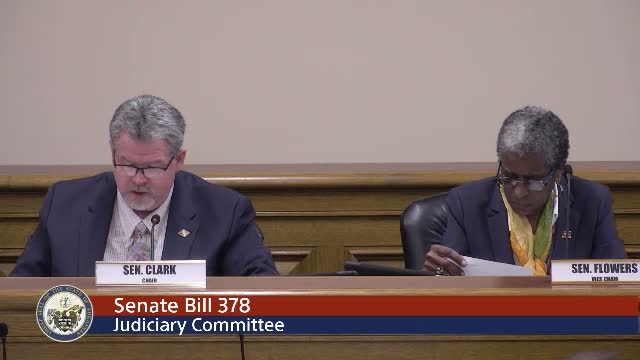
Senator Elliott presented Senate Bill 378, a measure aimed at providing sentencing equity for people who received long drug sentences under older law. He asked the committee to allow courts to set aside drug sentences where a person has served the time they would receive under current law and to let those individuals petition the court.
The bill prompted extended debate. Senator Flowers and others expressed concern about the legislature effectively stepping into functions of the parole board or governor and worried about releasing institutionalized people without adequate transitional supports. “I think that should go to the parole board,” Senator Flowers said, urging caution.
Senators also proposed alternatives. Several members suggested a senate resolution urging the governor to consider and expedite applications recommended by the parole board; others urged an interim study to evaluate individual cases rather than broad retroactive relief.
After discussion, the committee voted and Senator Elliott’s bill failed on the roll call. The committee then approved a motion to draft a senate resolution encouraging the governor to review parole and commutation applications for the individuals identified in SB 378 and related SB 517 and to consider an interim study of specific cases to identify candidates for relief.