Get Full Government Meeting Transcripts, Videos, & Alerts Forever!
Get email alerts on the Family Law Child Welfare topic
No spam. Unsubscribe anytime.
Committee advances bill to involve putative parents earlier and allow trial home placements with fit noncustodial parents
Summary
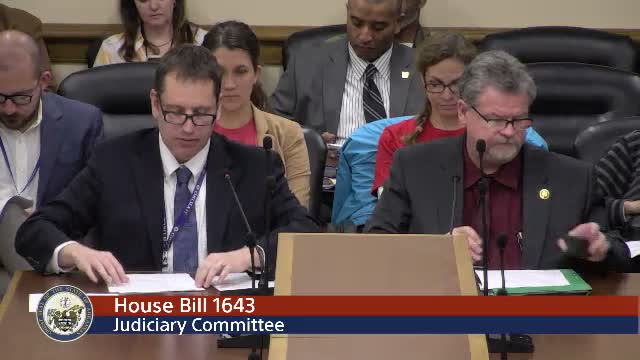
House Bill 16-43 would require courts and DHS to involve putative parents earlier in dependency-neglect cases, require DNA testing as a family service to resolve paternity, and permit trial home placements with fit noncustodial parents; juvenile judges and parent counsel voiced support and the bill passed by voice vote.
Gerald Sheram, senior general counsel for the Department of Human Services, presented House Bill 16-43 as part of the department's legislative package. Sheram said the measure creates procedures to involve putative parents early in dependency-neglect proceedings, require the court to resolve party status for putative parents at key stages, and treat DNA testing as a family service to resolve paternity.
"This bill will allow us to involve putative parents as a party to resolve their rights early on in the case and requires courts to resolve those rights," Sheram said, explaining the bill establishes a two-track model to resolve parental rights and allows expedited trial home placements with fit noncustodial parents when it is in the child's best interest.
Committee members asked whether putative fathers would have the right to appointed counsel and how the department would identify and serve potential putative parents. Sheram replied that putative fathers do not automatically get appointed counsel under current juvenile-code rules unless they have custodial status, but the bill allows the department and courts to involve and, where appropriate, sue a putative parent into a case so the court may order services such as DNA testing and, if necessary, resolve party status early.
Judge Ernest Brown (11th Judicial District) and parent-counsel Glenn Hoggard testified in favor of the bill; both said the measure aligns with existing practice in many jurisdictions and would help identify relatives and increase timely placements that support reunification. Judge Brown said juvenile judges are not opposed and described the bill as "an excellent bill." Parent counsel Hoggard called it a "compromise bill" arrived at through stakeholder meetings and said it would make trial home placements and early paternity resolution more practicable.
After questions and closing remarks from the sponsor, Senator Clark, the committee moved and passed the bill by voice vote.