Get Full Government Meeting Transcripts, Videos, & Alerts Forever!
Get email alerts on the Criminal Records topic
No spam. Unsubscribe anytime.
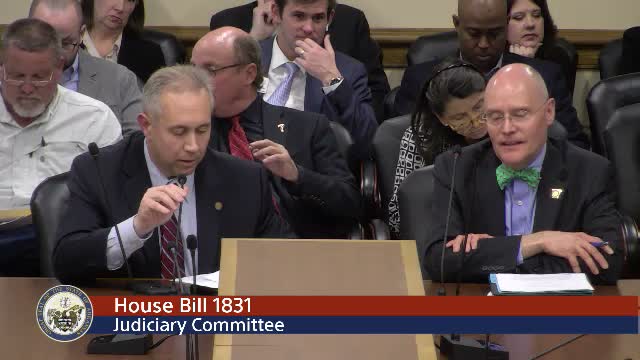
Judiciary committee clears bill to remove five‑year wait and fee for sealing some nonviolent felony records
Summary
House Bill 18-31, sponsored by Representative Boyd, would remove the five-year wait to seal nonviolent felony records and eliminate a $50 sealing fee; prosecutors and the sponsor said the changes would speed reentry into the workforce while preserving existing exceptions for licensing and law-enforcement access.
The Senate Judiciary Committee voted to report House Bill 18-31, a measure to remove barriers to sealing some nonviolent felony records.
Representative Boyd said the bill does three things: it expresses legislative intent to study record-sealing processes; it removes the five‑year lookback for nonviolent felonies so sealing may occur immediately after sentence completion and fulfillment of conditions; and it eliminates a $50 sealing fee. "This bill is about removing barriers to reenter society, obtain meaningful employment and housing," she told the committee.
Daniel Shue, a prosecuting attorney from the 12th Judicial District, described local practice and told senators that in Sebastian County a suspended imposition of sentence commonly allowed sealing after sentence completion; the 2013 change created the five‑year delay. "Once you've paid your fine, you've paid your restitution, you've done everything that you're supposed to do, then you should be able to get your record sealed, not wait five years after that," Shue said.
Committee members asked whether the bill would affect other disclosure exceptions; Representative Boyd said it would not change which entities (health‑care boards, law enforcement) can access sealed records. Senator Cooper asked whether the sponsor would compare the bill to a pending occupational licensing measure; members recommended reviewing potential conflicts.
A motion to pass the bill carried on a voice vote; the chair announced the bill had passed the committee and will proceed in the legislative process.