Get Full Government Meeting Transcripts, Videos, & Alerts Forever!
Get email alerts on the Sentencing Equity topic
No spam. Unsubscribe anytime.
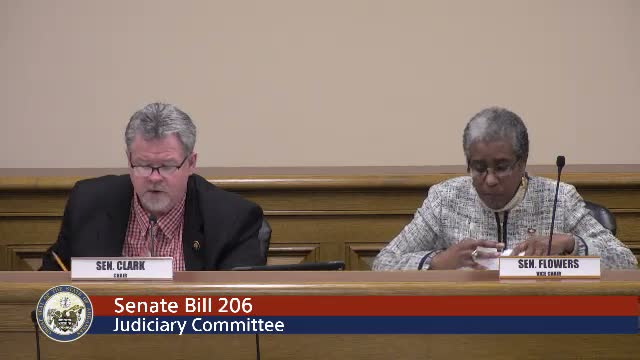
Judiciary committee hears emotional debate on sentencing‑equity bill; prosecutors oppose retroactivity
Summary
SP 378 would let some incarcerated people petition for sentence reductions to match later, lower statutory penalties for controlled‑substance offenses; proponents argued equity for those serving much longer terms, while prosecutors opposed retroactive changes that would alter plea bargains and jury sentences.
Senators heard extended testimony and debate on SP 378, a bill intended to give inmates a pathway to seek sentence reductions when subsequent statutory reforms reduced penalties for the same offenses. Sponsor Senator Elliott and the bill’s drafter, attorney Larry Froelich, said the measure offers a court petition process for individuals serving older, often much longer, sentences to seek alignment with current maximums.
Froelich said the legislation is meant to address cases in which someone sentenced under older law received substantially longer terms than would be imposed under present law; he estimated the bill could affect roughly 65–95 people whose sentences exceed current maximums for comparable offenses.
Prosecutors and the Arkansas Prosecuting Attorneys Association—represented by Bob McMahon and Daniel Shue—urged the committee to preserve the nonretroactivity agreement embedded in Act 570 of 2011. McMahon said plea negotiations and jury sentences were part of a bargain at the time and that revisiting those outcomes without individualized sentencing hearings could be unfair. “A deal’s a deal,” McMahon said, and prosecutors opposed creating a blanket retroactive remedy.
Committee members raised procedural options, such as allowing a broader sentencing hearing that would consider enhancements and other factors, or using parole and clemency avenues; defenders of the bill said a court petition pathway is a cleaner and administrable route that avoids burdensome resentencing proceedings.
Outcome and next steps: The committee did not adopt final language or record a passage in the provided transcript. Senator Elliott said she would work with prosecutors and committee members to seek a compromise and that she was open to amendments that would address prosecutors’ concerns while preserving equity mechanisms.
Key details: Sponsor estimates about 95 people may be affected, with roughly 65 confirmed by documentation; the bill as presented would not automatically alter enhanced sentences and would leave judges to consider enhancement factors if applicable.
Sources: Testimony from Larry Froelich and statements from Bob McMahon and Daniel Shue for the Arkansas Prosecuting Attorneys Association.