Get Full Government Meeting Transcripts, Videos, & Alerts Forever!
Get email alerts on the Child Welfare Reform topic
No spam. Unsubscribe anytime.
Judiciary Committee advances several child-welfare bills on visitation, orders and hotline screening; SB 287 amended and held for further review
Summary
The committee passed a bundle of child-welfare measures—changes to visitation presumptions, rules to ensure timely entry of court orders, and limits on evidence at probable-cause hearings—while adopting an amendment to SB 287 (child-maltreatment hotline and central registry reforms) and holding that bill for further negotiation with prosecutors.
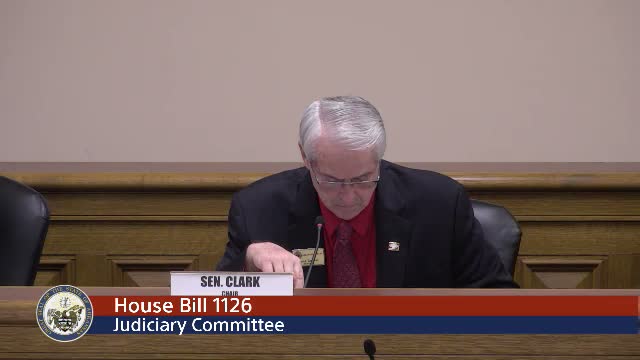
Members of the Judiciary Committee spent an extended portion of the hearing on a series of child-welfare bills presented by Sen. Clark and stakeholders including the Parent Counsel Commission and Division of Youth Services.
Brian Welch, executive director of the Parent Counsel Commission, described proposals that would make unsupervised visitation the presumptive model (settling on a four-hour-per-week standard), allow judges to adjust visitation for hardship, and provide clearer mechanisms when supervised visitation is required. "We believe that visitation is probably the most important service provided by the department when children are taken from their homes," Welch said.
The package also included measures to require the timely entry of court orders into the record and to narrow evidence presented at probable-cause hearings when parents choose to stipulate, with the goal of avoiding lengthy evidentiary hearings that function like adjudications. Welch said the rules are intended to protect clients' rights while making probable-cause hearings more efficient.
Director Michelle Martin of the Division of Children and Family Services presented SB 287, a complex bill to reduce unnecessary investigations by implementing secondary-review rules, permitting abbreviated investigations in certain cases (including anonymous reports), and requiring a risk assessment before placing someone on the central registry. Martin said Arkansas investigates child-maltreatment referrals at a higher rate than neighboring states and seeks to focus investigative resources on cases that meet statutory thresholds.
Prosecutors asked for substitute language to clarify some protections; the committee adopted an amendment to SB 287 but then pulled the bill down to rehear it in the afternoon to allow additional drafting with prosecutors. Committee members praised the collaborative process and repeatedly emphasized the need to balance child safety with process protections for parents and caregivers.
Several of the child-welfare bills were passed by voice vote; SB 287 was amended and held for further review.