Get Full Government Meeting Transcripts, Videos, & Alerts Forever!
Get email alerts on the Victim Privilege topic
No spam. Unsubscribe anytime.
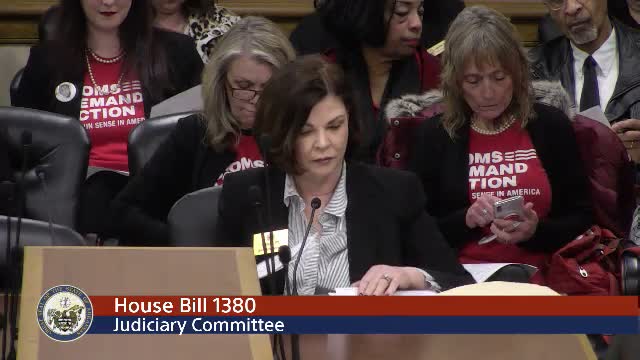
Senate Judiciary Committee rejects bill to make victim‑advocate communications privileged, then expunges the vote
Summary
A bill to create a privilege for confidential communications between domestic violence victims and shelter advocates failed on a 3–2 committee vote after defenders warned it could block disclosure of potentially exculpatory statements; the committee later voted to expunge that failed vote and the sponsor said he will work with critics.
The Senate Judiciary Committee on Feb. 27 considered House Bill 13 80, which would establish a confidential‑communications privilege between victims of domestic violence and advocates at domestic‑violence shelters and centers. Representative Faught, presenting the bill, said the measure “makes that possible” and would align Arkansas with other states that protect victim‑advocate communications.
“Confidentiality between advocates and victims of violence is the key principle of success for domestic violence and sexual assault programs,” Representative Faught said, adding the bill clarifies shelter definitions and retains a judicial‑review exception for court‑ordered disclosures.
Committee questioning focused on scope and legal consequences. Greg Parish of the Arkansas Public Defender Commission told senators the proposed privilege could interfere with discovery. “If it’s exculpatory,” Parish said, “we are entitled to receive exculpatory information during the discovery process,” and a privilege that blocks prosecutor disclosure could limit the defense’s ability to learn inconsistent statements later useful for impeachment.
Proponents said confidentiality encourages victims to seek help and reduces burdens on shelter programs, which sometimes must obtain counsel and file motions to quash subpoenas. Representative Faught argued that advocates’ ability to promise confidence is central to victims’ willingness to come forward.
After brief discussion the committee took a roll‑call vote. The chair announced the bill failed by a 3–2 margin. Following the vote, Senator Ballinger moved to expunge the committee’s vote on House Bill 13 80; the motion to expunge carried by voice vote later in the session.
What happens next: Sponsor and opponents signaled a willingness to negotiate changes. Representative Faught said he would provide clarification about which agencies license and regulate shelters; advocates and defenders said they would continue discussions about ensuring victim safety while preserving defendants’ access to potentially exculpatory information.
Actions and status: The committee recorded a failed motion to pass HB 13 80 (vote announced as 3–2) and later voted to expunge that committee vote. No final floor action was recorded in the committee transcript provided.
Sources: Committee proceedings, testimony from Representative Faught and Greg Parish.