Get Full Government Meeting Transcripts, Videos, & Alerts Forever!
Get email alerts on the Criminal Sentencing topic
No spam. Unsubscribe anytime.
Committee moves to close loophole for offenses committed "in the presence of a child"
Summary
The Senate Judiciary Committee passed HB1403, which adds two second-degree assault offenses to an existing sentencing enhancement applied when certain crimes occur in the presence of a child, allowing judges to impose an additional 1–10 years. Prosecutors said the change clarifies statutory language rather than creating a new penalty.
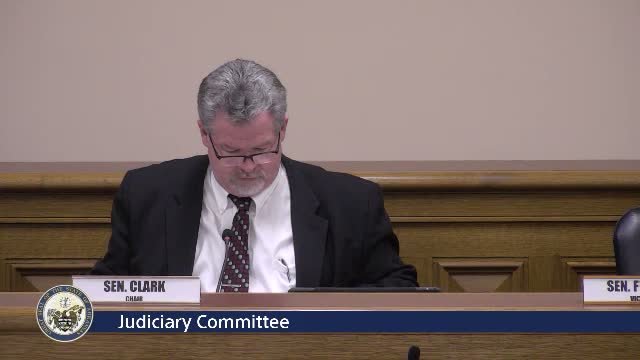
House Bill 1403, sponsored by Representatives McCullough and Fife and taken up in the Senate Judiciary Committee, was passed by voice vote after sponsors said the bill clarifies an existing sentencing enhancement for offenses committed in the presence of a child.
Supporters told the committee the bill simply adds two specified second-degree assault offenses that were inadvertently omitted from the list of crimes eligible for the enhancement, rather than creating a new penalty category. "The enhancement already exists; we're just adding things that qualify for the enhancement," a prosecutor told the committee.
Deputy prosecutor Laurie Kimpuras and prosecuting attorney Daniel Hsu explained that under current statute a court may impose an additional penalty when a felony involving homicide, assault, domestic battery or assault on a family member is committed in the presence of a child. Hsu said the additional penalty can range from 1 to 10 years depending on circumstances. Committee members asked whether the enhancement applies only to felony-level offenses and were told it does not apply to misdemeanors.
Sponsor comments emphasized the bill's intent to "close the loophole" that had left the two second-degree assault offenses out of the enumerated list. No witnesses signed up in opposition, and the sponsor moved passage. The committee took a voice vote and the chair declared the motion carried.
The committee did not record a roll-call tally in the hearing; outcome: the committee passed HB1403. The bill will proceed according to the Senate's legislative calendar for further consideration.