Get Full Government Meeting Transcripts, Videos, & Alerts Forever!
Get email alerts on the Court Procedure topic
No spam. Unsubscribe anytime.
Circuit-clerk cleanup bill prompts questions about 'legal description' language
Summary
Sen. Ballenger's bill would clarify filing requirements for circuit clerks, changing 'sworn' to 'notarized' and requiring proof of service for lien filings. Attorneys asked whether switching from 'correct description' to 'legal description' could create ambiguity; the committee deferred final action after a roll-call confusion and plan to re-hear the item.
Senator Ballenger presented a bill described as a mostly technical cleanup to simplify circuit clerks' work. The sponsor said the changes replace some older language (for example, clarifying that certain filings must be notarized rather than merely 'sworn') and require proof of service be provided to clerks in lien filing processes. Ballinger said the fee structure referenced in the draft simply mirrors existing law (first page $15, $5 for each additional page).
Jeff Moore, an attorney in Little Rock, asked whether replacing a "correct description" with a required "legal description" could create uncertainty because county treasurers and assessor offices sometimes use brief descriptions that are not formal legal land descriptions used for title work. Ballenger said the intent is to require a formal legal description and that clerks are not expected to validate title work; if filers provide an insufficient legal description, the lien might not attach to property and that risk would rest with the filer.
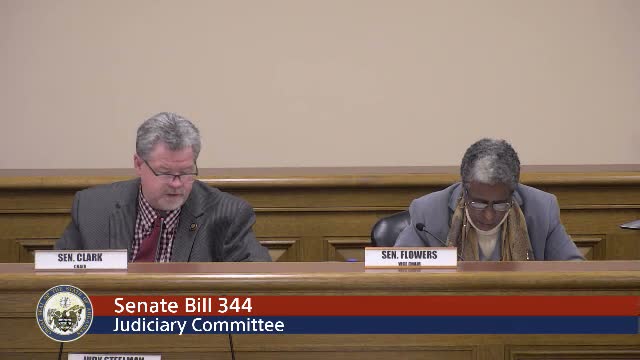
The committee initially took a voice vote on a motion to do pass. Later a senator requested a roll call, and the roll-call count showed only four favorable votes; the chair announced the bill failed on that count. Members agreed to expunge the failing vote so the bill can be re-heard that afternoon rather than reflect a formal committee defeat.
The committee did not adopt immediate statutory clarifications during the hearing; sponsors and attorneys signaled willingness to refine language about what qualifies as a legal description to reduce the risk of unintended consequences for filers and clerks.