Get Full Government Meeting Transcripts, Videos, & Alerts Forever!
Get email alerts on the Mandated Reporters topic
No spam. Unsubscribe anytime.
Committee codifies immunity for good‑faith mandated‑reporter calls
Summary
The Senate Judiciary Committee approved language clarifying civil and criminal immunity for mandated reporters who make good‑faith reports, aligning state code with a recent federal Victims of Child Abuse Act reauthorization and DCFS hotline practice.
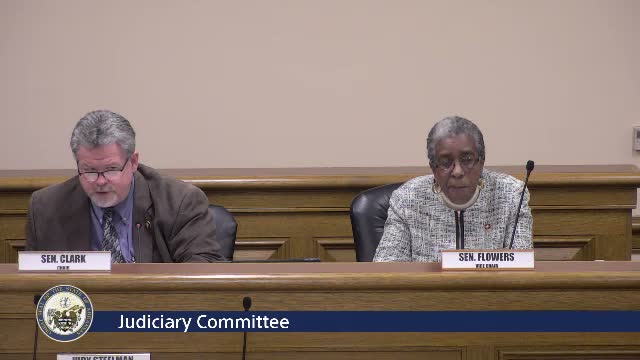
The Senate Judiciary Committee on Wednesday approved a bill clarifying that mandated reporters who make child‑maltreatment reports in good faith are immune from civil and criminal liability, committee members and agency witnesses said.
Supporters said the legislation simply places existing protections into the state code and mirrors a federal reauthorization. "This provides civil and criminal immunity for a good‑faith report," said Department of Human Services senior general counsel Darrell, noting the language "tracks" requirements added under federal law in January 2019. Michelle Martin, director of the Division of Children and Family Services (DCFS), told the committee the bill is consistent with current law and the hotline’s screening protocols.
The measure drew questions from members worried about how the statutory standard—"reasonable cause to suspect" child maltreatment—applies in everyday school settings. One committee member asked whether a child arriving at school with bruises could trigger a report. Martin replied that the assessment is fact‑specific: bruises alone may not meet the standard, but bruises accompanied by an allegation such as "my daddy hit me" would. She said mandated‑reporter training provided by the Commission on Domestic Violence and Child Abuse includes examples and definitions of abuse and neglect.
Committee members also pressed DCFS on data about screening: panelists said an estimated large share of hotline calls are screened out and that the agency can produce a special data pull on the number of mandated‑reporter referrals screened out. "The hotline has protocols...they do a second screening on especially those that are screened out," Martin said.
After discussion, the sponsor closed and moved the bill for a "do pass" recommendation; the motion was seconded and approved on a voice vote.
The committee did not record a roll‑call tally in the transcript. The bill now advances according to committee procedure.