Get Full Government Meeting Transcripts, Videos, & Alerts Forever!
Get email alerts on the Hb1243 topic
No spam. Unsubscribe anytime.
Senate Judiciary panel pauses bill to consolidate probation/parole supervision fees after budget and spending questions
Summary
Lawmakers paused consideration of House Bill 12‑43, which would direct the full $35 monthly supervision fee paid by probationers and parolees into the Community Correction Revolving Fund, after agency testimony raised unanswered questions about deleted spending restrictions and potential budget trade‑offs.
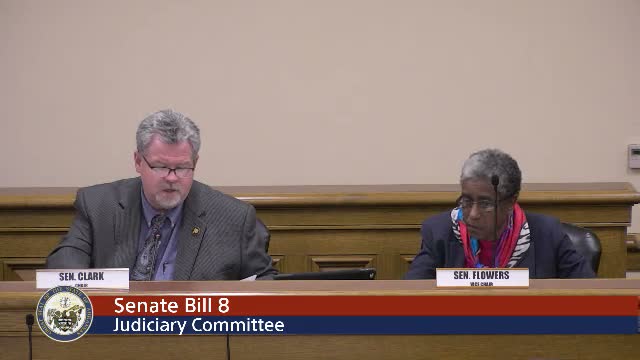
The Senate Judiciary Committee on Thursday paused action on House Bill 12‑43 after extended questioning about how the bill would change limits on spending and whether consolidating a $35 monthly supervision fee would supplant general revenue for parole and probation staffing.
Senator Irvin, who presented the bill, said the proposal would delete the separate “best practices” fund and deposit the entire $35 fee into the Community Correction Revolving Fund so that the money would be used for “continuation and expansion of community correction programs and supervision as approved by the board of corrections.” He described the change as an accounting consolidation prompted by Act 423 (2017), which, he said, already raised the standards for evidence‑based programming.
Kevin Murphy, director of Arkansas Community Correction, told the committee the combined $35 fee brings in “about $8,000,000 a year” and that those revenues pay for drug testing, transitional housing, leases and staff — including 65 drug‑court positions funded from the fund. Murphy said expenditures currently exceed revenue and that the consolidation would not grant the agency any new authority to spend beyond existing limits. He also said the agency waives fees for those unable to pay and that it does not revoke supervision solely for nonpayment.
Several members pressed for specifics removed from the bill. Senator Bond flagged language that had required 75% of the funds be spent on direct services to offenders and a 10% cap on staff training; he said removing those restrictions raised questions about whether the fund could be used in ways that would replace general‑revenue funding for probation and parole officers. “I would just like the opportunity to make sure I understand how it's gonna be spent or if we're somehow replacing other funding,” Bond said.
Senator Flowers and others pressed for recent collection totals and how many supervised individuals were current on payments; Murphy said the agency’s average collection rate was “a little over 80% of those that are available to pay” and that exact figures are reported quarterly to the legislature. Members also asked whether the language change would allow the agency to reallocate money to non‑supervision purposes; Murphy said any use of excess funds would still require board of corrections approval.
With concerns unresolved, Senator Irvin agreed to pull the bill so Department of Community Correction staff could meet individually with Senators Bond and Flowers and return with clarified accounting and assurances. The bill was not voted on; the committee paused consideration to allow follow‑up between agency staff and the concerned members.
The committee’s request for further detail means the bill could return to the Judiciary Committee after staff provide the requested accounting and spending clarifications.