Get Full Government Meeting Transcripts, Videos, & Alerts Forever!
Get email alerts on the Female Genital Mutilation topic
No spam. Unsubscribe anytime.
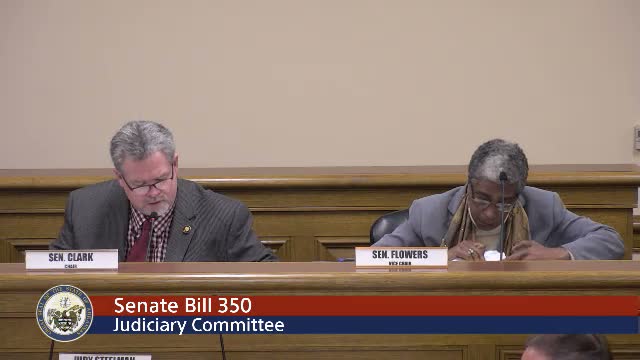
Committee advances bill to criminalize female genital mutilation, add reporting and education
Summary
Sen. Bridal Davis presented a bill to define and criminalize female genital mutilation in Arkansas statute, add awareness components and reporting by mandated reporters; prosecutors and members discussed statute-of-limitations language and will amend reporting to the Department of Health.
Senator Bridal Davis told the Senate Judiciary Committee that her bill would create a state offense for female genital mutilation (FGM), add education and awareness provisions and provide prosecutors with tools to pursue cases that federal law has not routinely produced. Davis cited national estimates read into the record from the CDC and the World Health Organization, saying the bill "acknowledges that it is occurring in the state."
Committee members asked how the bill treats statute-of-limitations and reporting. Davis said the criminal statute in the draft provides that the statute of limitations does not begin to run until a victim reaches 18 or when the offense is first reported to law enforcement, whichever occurs first. She also said civil claims would be available until a later cutoff referenced in the bill text. Daniel Shue, prosecuting attorney for the 12th Judicial District, told the panel that a class C felony typically carries a three-year statute-of-limitations for prosecution; committee discussion clarified how criminal and civil deadlines would interact.
Davis said she will amend the bill to change references from the Department of Human Services to the Department of Health for data collection because the Department of Health already performs related public‑health data gathering. She also said the bill will move definitional language into the child‑maltreatment code for consistency. No witnesses registered to speak against the measure; the committee moved and recorded a do‑pass recommendation and the chair announced the bill passed out of committee.
Committee discussion repeatedly emphasized that the bill is intended to target harmful practices committed in secret and not to create cultural exemptions. "There is no excuse for cultural religious reasons for you to cut body parts off of little girls or women," Davis said. Prosecutors and committee members agreed to refine language on reporting burdens so health-care providers are not required to investigate every pediatric patient but remain mandated reporters when they observe abuse.