Get Full Government Meeting Transcripts, Videos, & Alerts Forever!
Get email alerts on the Corrections Policy topic
No spam. Unsubscribe anytime.
Judiciary panel backs sentence enhancement for assaults on correctional staff, despite juvenile-justice objections
Summary
The committee approved SB109 to add a sentence enhancement when a correctional employee is the victim of a first-degree battery, raising maximum penalties for covered incidents; witnesses and public commenters debated scope, juvenile applicability and alternatives such as staffing and training.
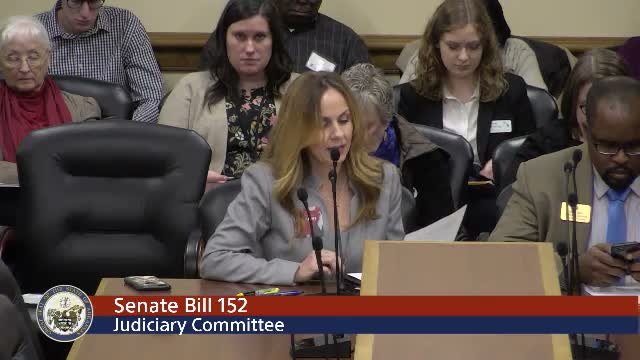
The Senate Judiciary Committee voted to give SB109 a ``due pass,'' advancing a bill that creates a sentence enhancement for battery in the first degree when the victim is a correctional employee.
Senator Sandra Urban presented the bill, and Solomon Graves, legislative liaison for the Department of Correction, told the committee the change was intended to align the first-degree statute with an existing enhancement in the battery-second statute and to signal that assaults on correctional staff will be met with the harshest allowable sentences. Graves said the bill was developed in consultation with the sheriff—s association and chiefs of police to ensure detention employees are covered.
Prosecuting Attorney Kyle Hunter, representing the Arkansas Prosecuting Attorneys Association, explained the enhancement would increase the potential penalty range for covered first-degree battery offenses toward the Class Y sentencing range, which can include terms from 10 to 40 years or life depending on offense and sentencing.
Committee members asked whether the enhancement covered Division of Youth Services (DYS) staff and whether it applied only to in-facility incidents. DHS representative Betty Goeman said the bill applies to staff "within DYS facilities" and "does not apply to DCFS" or to staff acting outside facility scope. DOC witnesses said projected population effects from the sentencing change would increase in-custody population modestly over time but not require new construction.
Brenda Sheffler, a licensed clinical social worker who testified in opposition, warned punitive approaches can do more harm than good for traumatized adolescents and said funds would be better spent on staffing, training and creating safer environments at DYS facilities. Sheffler noted juvenile-justice-reform efforts are underway that could address the underlying causes of violence in facilities.
After discussion, a senator moved to pass the bill; the committee voted by voice and the chair announced the motion carried.