Get Full Government Meeting Transcripts, Videos, & Alerts Forever!
Get email alerts on the Robocalls topic
No spam. Unsubscribe anytime.
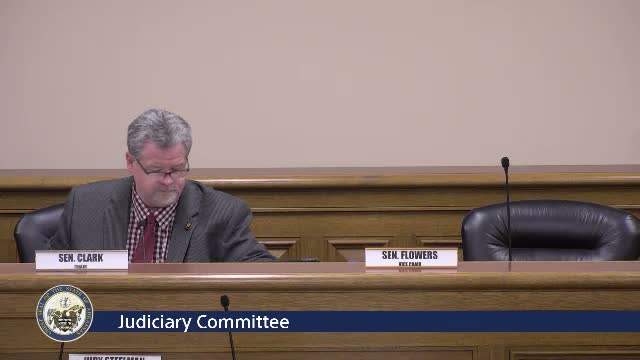
Senate Judiciary Committee debates tougher penalties for unlawful robocalls in SB 350
Summary
Sen. Garner introduced SB 350 to raise penalties for unlawful robocalls from a class B misdemeanor to a class D felony; prosecutors told the committee that tracing spoofed calls and proving who initiated them is technically difficult and costly, and the committee expunged an initial failing vote to allow re-hearing.
Senator Garner introduced Senate Bill 350, which would increase penalties for unlawful automated telephone solicitation by reclassifying the offense from a class B misdemeanor to a class D felony. Garner said the change is intended to provide "more teeth" for state enforcement in rare cases when calls are traceable and originate within Arkansas.
The committee sought practical details about enforcement. Kyle Hunter, prosecuting attorney in District 11 West and president of the Arkansas Prosecuting Attorneys Association, observed that such prosecutions are rare in Arkansas and often difficult to bring because spoofing and false caller-ID data make it hard to tie an automated dialer to a particular person in the state. "You'd have to be able to prove beyond a reasonable doubt a particular person did a particular act," Hunter said, noting that tracing the origin of calls and connecting them to an individual or office outside the state would be "problematic" and expensive.
Hunter also read the existing code provision that currently governs automated telephone solicitation, explaining that the statute addresses automated selection and dialing systems and recorded messages. Committee members pressed whether political robocalls are affected; Garner replied that political messages implicate constitutional protections and that the bill is aimed at "truly bad actors" using spoofing and scams, not constitutionally protected campaign calls.
Senator Ballinger moved for immediate consideration and the committee approved that motion by voice vote. A subsequent motion to pass SB 350 failed on a voice vote. Ballinger then moved to expunge the failing vote so the bill can be re-heard; the committee approved the expungement, preserving the option to bring the bill back for further consideration.
The committee did not adopt statutory changes to address cross‑jurisdictional enforcement or technical traceability in the bill text during the hearing; prosecutors urged that enforcement resources and practical evidentiary paths be examined as the bill moves forward. The committee left an expunged record so supporters may reintroduce the measure with clarifications or amendments.