Get Full Government Meeting Transcripts, Videos, & Alerts Forever!
Get email alerts on the Electronic Prescribing topic
No spam. Unsubscribe anytime.
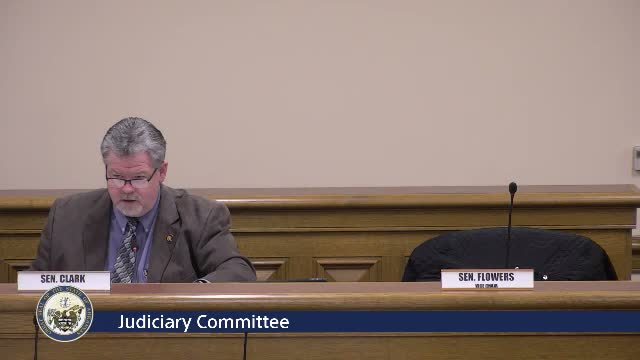
Senate Judiciary Committee passes bill to require electronic prescribing for controlled substances, accepts federal waivers
Summary
The committee approved SB174, amended to let federal HHS waivers satisfy state requirements for electronic prescribing of controlled substances. Supporters said e-prescribing will reduce forged prescriptions and help combat the opioid epidemic; members raised concerns about rural connectivity and disaster contingencies.
The Senate Judiciary Committee on [date] passed SB174 with an amendment that allows federal waivers from the U.S. Department of Health and Human Services to be used in Arkansas for exemptions to an electronic-prescribing requirement for controlled substances.
Senator Hammer, the bill sponsor, said the measure is meant to align Arkansas with an upcoming Medicare requirement and to reduce diversion and fraud by moving prescriptions from paper to certified electronic transmission.
Kirk Lane, state drug director, told the committee that electronic prescribing reduces handwriting errors, gives prescribers and pharmacists access to a patient’s medication history, and provides automated clinical checks for dosage and drug interactions. Lane cited state data and said 3%–9% of legitimate prescriptions are diverted or forged; he also cited a 2017 figure of roughly 2,000,356 opioid prescriptions as context for the magnitude of diversion concerns.
The amendment adopted early in the hearing substitutes state-administered waiver authority with a provision that federal HHS waivers (created under federal law passed late last year) will count in Arkansas and that regulatory boards will link to those waivers so dispensers can verify valid exemptions. Scott Pace of Impact Management Group, representing pharmacy interests, told the committee that 14 other states have adopted similar systems and that HHS will publish implementing rules before January 2021.
Committee members pressed sponsors and witnesses about how waivers would be handled in short-term outages, rural broadband failures, or localized disasters. Supporters said the bill retains waiver authority for operational outages and financial hardship, but that federal HHS will administer those waivers under the amendment. Lane and Pace said HHS and the electronic-prescribing ecosystem use vendor certification and two-factor authentication; Pace told senators he was not aware of any fraudulent e-prescriptions reported in the 14 states that have implemented the systems.
Paul Calvert, a public commenter who registered opposition, said mandatory electronic prescribing increases government surveillance ability and could impede access for legitimate patients and clinicians. The sponsor and supporters responded that about 98.2% of pharmacies in Arkansas are equipped to receive electronic prescriptions and that many prescribers and chains already are transitioning to comply with federal mandates.
After additional discussion about rural connectivity and implementation timelines, the committee voted to pass SB174 as amended.
What comes next: The bill moves forward as amended; sponsors said they will continue outreach to address operational concerns before the federal compliance date.