Get Full Government Meeting Transcripts, Videos, & Alerts Forever!
Get email alerts on the Teacher Recruitment topic
No spam. Unsubscribe anytime.
BLR Presents Teacher Recruitment and Retention Findings; Survey Response and Data Governance Draw Lawmakers' Attention
Summary
The Bureau of Legislative Research presented its adequacy study section on teacher recruitment and retention, reporting FY23 workforce figures and survey results; legislators questioned survey response rates, data governance and regional variation in shortages and retention risks.
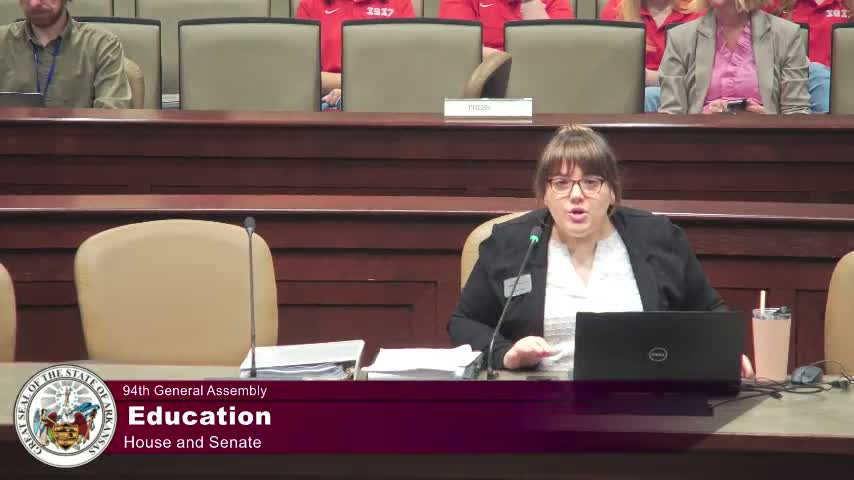
Adrienne Beck of the Bureau of Legislative Research presented the committee with the adequacy study section on teacher recruitment and retention, using FY23 data and BLR's educator surveys. Key data points included a BLR dataset listing 36,175 teachers in FY23, an average of roughly 12 years of experience, roughly 94 percent fully certified, and a reported retention rate of about 74 percent in the BLR measures.
Beck and BLR staff reviewed variation across regions and school types: traditional districts generally showed higher percentages of master's degrees and board-certified teachers, while small and high-poverty districts tended to have lower certification rates and retention. BLR also described teacher shortages in core academic subjects (excluding computer science and music) and documented geographic concentrations of uncertified teachers filling vacancies.
Committee discussion focused on BLR's survey methodology and response rates. BLR reported that approximately 5,000 teachers responded to the teacher survey (their first attempt at surveying the full teacher population rather than a sample), and staff acknowledged response-rate limitations while noting consistency with certain national survey patterns. Members pressed BLR to provide clearer slide notes indicating sample sizes and response denominators for future briefings.
BLR also described policy and programmatic responses: multiple pathways for certification (traditional and alternative routes, a "grow your own" initiative begun in fall 2022), targeted financial incentives for hard-to-staff areas, loan forgiveness programs and a range of evidence-based retention strategies (mentoring, residency models, improved working conditions). Beck emphasized the significance of data governance improvements (teacher roster verification, evaluation reporting) to ensure accurate eligibility and accountability measures.
BLR staff and members agreed to follow up with additional district-level breakdowns, clarification of survey denominators on presentation slides and options for aligning state training and recruitment programs with local workforce needs.