Get Full Government Meeting Transcripts, Videos, & Alerts Forever!
Get email alerts on the Juvenile Court Procedure topic
No spam. Unsubscribe anytime.
Senate Judiciary panel passes cleanup to juvenile-court report rules
Summary
The Judiciary Committee approved SB82 to clarify when prefiled court and CASA reports can be admitted in dependency-neglect hearings, directing courts to determine on the record whether such reports are admissible and allowing parties to make evidentiary objections.
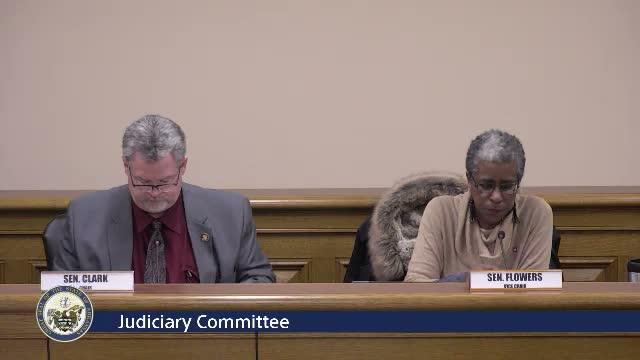
The Senate Judiciary Committee voted to pass SB82, a bill the sponsor characterized as a technical cleanup to rules governing court reports in dependency and neglect proceedings. Senator Clark recognized the measure, and Brian Welch, executive director of the Arkansas Parent Council Commission, told the committee the change was meant to stop judges from reading prefiled reports before hearings without counsel having an opportunity to object.
Welch said the bill corrects language left over from last session and instructs judges "to determine on the record whether a report or an addendum report shall be admitted in evidence based on any evidentiary objections made by the parties." He described the change as a way to ensure courts explicitly rule on evidentiary objections rather than allowing reports to be treated as unchallenged fact before a hearing.
Committee members questioned whether the new wording should be made clearer so judges explicitly rule on objections; Welch agreed staff could "clean up the language" to avoid ambiguity. No witnesses registered formal opposition to SB82 during the public sign-up; a representative of the Administrative Office of the Courts who had signed in said she had not intended to include SB82 on her list and stepped down.
After brief discussion, a member moved to pass the bill, the committee voted by voice and the chair announced the bill passed.
The committee did not record a roll-call tally in the hearing. The sponsor said the amendment is intended to bring practice back in line with statutory limits and to protect parties from untested hearsay entering the record prematurely. The committee moved on to other bills after the vote.