Get Full Government Meeting Transcripts, Videos, & Alerts Forever!
Get email alerts on the School Funding topic
No spam. Unsubscribe anytime.
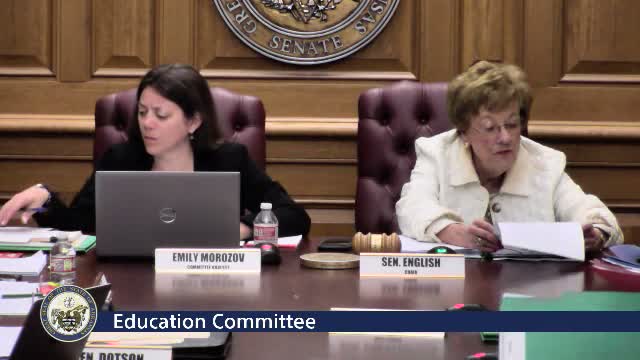
Senate Education Committee advances adequacy funding bill that raises school funding 2.8% in first year
Summary
Representative Brian Evans told the Senate Education Committee that House Bill 1688 would provide a 2.8% overall adequacy funding increase in the first year, including a 1.8% COLA and new per-student allotments for classified staff and health insurance; lawmakers pressed him on whether the increase keeps pace with inflation and expressed concern for support staff pay.
Representative Brian Evans, House District 68, presented House Bill 1688 on the Senate Education Committee floor as the state’s adequacy funding bill for public schools. Evans said the bill includes a 1.8% cost‑of‑living adjustment in the first year and 2.17% in the second year, adds $44 per average daily membership for a classified‑staff salary enhancement, and provides $30 per student for health insurance. He said categorical increases include funding for alternative learning environments (ALE) and English language learners (ELL), and the bill raises the special‑education high‑cost occurrence fund by about $3.1 million to $17 million. Evans said the teacher equalization salary fund remains at $60 million.
The bill drew questions from members worried about whether the increase is adequate against current inflation. Senator Chesterfield said the state’s inflation rate is “about 8%,” and asked whether the 2.8% increase would put districts at risk of failing to keep up with rising costs. "We are substantially ... proposing substantially less than we had put in adequacy earlier in the year," Chesterfield said, adding that support professionals such as bus drivers and custodians are already reporting frustration that their raises lag those of certified staff.
Evans acknowledged the concern and said some additional resources will flow through the LEARNS act (literacy, high‑impact tutoring and summer tutoring grants), which would not be reflected in the adequacy report but could result in more money reaching districts. He said the Department of Education’s figures informed the $44 per‑student number and that the package represents what those figures showed the state could afford this session.
Senator Davis noted that, percentage‑wise, this is one of the larger biennial increases in adequacy funding in recent history, and other members pointed out LEARNS funding adds more dollars beyond the adequacy increase. With no public testimony recorded for or against the bill, the committee voted by voice and the motion passed.
The committee advanced House Bill 1688 for further consideration. The next step is committee scheduling and then any downstream floor action in the respective chamber.