Get Full Government Meeting Transcripts, Videos, & Alerts Forever!
Get email alerts on the Name Image Likeness topic
No spam. Unsubscribe anytime.
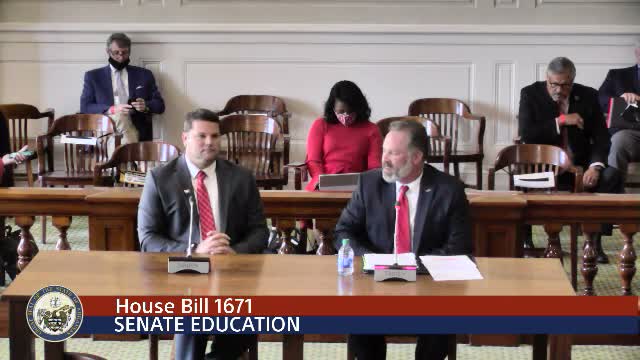
Senate Education Committee passes bill letting Arkansas college athletes profit from name, image and likeness
Summary
At a special meeting, the Senate Education Committee voted to pass House Bill 1671, which would allow college student‑athletes in Arkansas to sign contracts and receive compensation for the commercial use of their name, image and likeness; the measure is effective Jan. 1, 2022 and passed the committee by voice vote.
At a special meeting the Senate Education Committee voted to pass House Bill 1671, a measure that would let college student‑athletes in Arkansas enter into contracts and receive compensation for use of their name, image and likeness.
Senator Hester, the bill’s sponsor, opened the session and recognized Matthew McCoy, senior associate general counsel for the University of Arkansas in athletics, who told the committee the legislation would restore rights that student athletes currently lack in the state. "This would restore the student athletes' rights to use their name, image, and likeness when they enter into agreements and to receive compensation for their name, image, and likeness," McCoy said during his testimony.
McCoy and university athletic directors emphasized that the bill is not intended to convert athletes into employees or to pay them for participation. McCoy said the bill "does not render student athletes employees" and "does not pay them for their participation or performance," and that it also preserves institutions’ codes of conduct and team rules. He told senators the bill would require prompt disclosure of NIL agreements and permit institutions to set disclosure timeframes that fit their type of campus.
University athletic directors described education and compliance plans. Hunter Juracek, director of athletics at the University of Arkansas Fayetteville, said his school has hired a senior associate athletic director whose role is to develop a six‑week curriculum to teach student athletes how to monetize their name and likeness without being exploited. "This is a bill about student athletes and for the benefit of student athletes," Juracek said.
Committee members pressed on safeguards. Senator Beckham and others asked whether the bill could require a personal‑finance class or ongoing support; McCoy and the athletic directors said many institutions already provide financial‑literacy programming and that embedding a statutorily mandated course could be difficult and might reduce institutional flexibility. The athletic directors said educational programming will include coaches, athletic staff and, where appropriate, family engagement.
McCoy described legal context and limits. He cited the O’Bannon antitrust litigation and noted Florida’s NIL law (effective July 1, 2021) and activity in many other states. He said Arkansas’s Uniform Agent Act and other professional‑representation statutes remain in force and that the bill addresses representation only with respect to NIL while a student is enrolled. McCoy also said the bill allows athletes to rescind NIL agreements after they leave enrollment so they are not locked into outdated arrangements; the bill’s effective date is listed as Jan. 1, 2022.
A former Razorback and recent graduate, Sydney Parley, told senators she wished she could have used her name, image and likeness while a student to help fund internships and training. "Athletes, they don't have the time to work due to their packed schedules," Parley said, describing camps and internships she later pursued after eligibility ended.
Senator Hester closed the discussion and the committee recorded a motion to pass the bill. The measure passed on a committee voice vote; the chair announced, "Ayes have it." The committee then adjourned.
The committee record does not include a roll‑call tally in the transcript, and the bill now moves to the next steps in the legislative process as provided under Senate rules.