Get Full Government Meeting Transcripts, Videos, & Alerts Forever!
Get email alerts on the Committee Votes topic
No spam. Unsubscribe anytime.
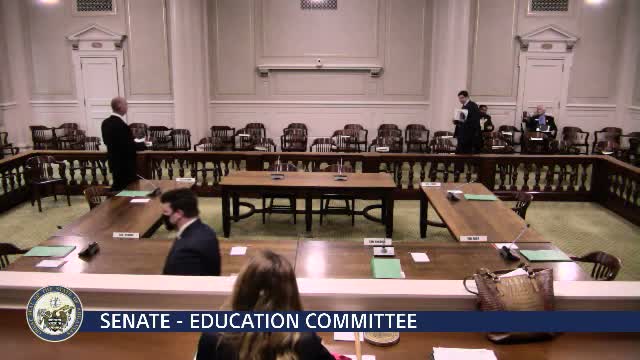
Senate Education Committee advances three bills on curriculum opt-outs, civics test and military-family scholarships
Summary
The Senate Education Committee advanced three bills in a voice vote: an opt-out process for parents (HB1464), a 60% passing threshold for a civics test (HB1744), and an expansion of the SUCCEED scholarship to include military families if funds remain (HB1446). Exact roll-call tallies were not recorded in the transcript.
The Senate Education Committee convened to consider several education measures and voted by voice to advance three bills.
Representative Cozart told the committee that House Bill 14 64 would allow "a parent or legal guardian of a child that is in school" to petition the school district to exclude their child from curriculum, instructional materials or events the parent believes are detrimental, after following local procedures up the chain of command to the school board.
Sponsor for House Bill 17 44 said the legislation simply sets a 60% minimum passing score on the U.S. citizenship civics test now in use; "we just are asking for a 60%," the sponsor said. Committee members asked whether the test format — which provides corrective passages after incorrect answers — makes a straight percentage an appropriate end-of-course standard.
Representative Ray introduced House Bill 14 46 to expand eligibility for the SUCCEED scholarship so children of military families may qualify if funds remain after current priority groups. Ray said the SUCCEED program has been operating since 2016 and cited program feedback: "The parental satisfaction rate is 97 percent," and that parents reported academic and social improvements. Senator Chesterfield pressed for Department of Education data and said expansion risks diverting limited funds from public education; Ray responded that the bill "does not add any funding to the program" and that the fiscal impact is "0." Several senators also asked whether recipients must attend an ADE-approved participating school; the sponsor said they must and estimated there are about 20–21 participating schools.
Committee members moved and carried motions to "do pass" on each bill by voice vote; the chair announced the bills passed. The transcript records voice votes and chair announcements but does not record roll-call tallies or named vote records.
What happens next: The three bills were advanced out of committee; the record indicates further action will proceed through the chamber’s normal process.