Get Full Government Meeting Transcripts, Videos, & Alerts Forever!
Get email alerts on the Literacy Policy topic
No spam. Unsubscribe anytime.
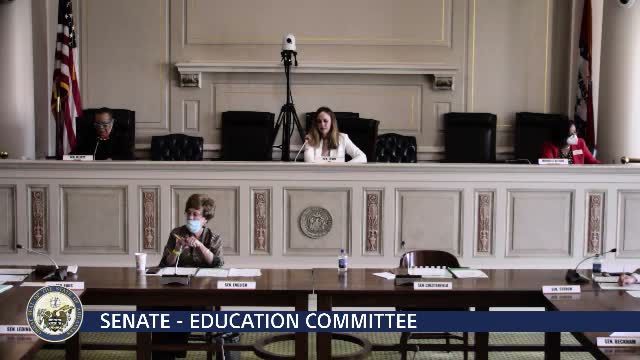
Senate advances science-of-reading incentives, creates literacy ombudsman role
Summary
SB 349 incentivizes districts to adopt curricula aligned with the science of reading, creates a literacy ombudsman reporting to the Secretary of Education, and aligns timelines with prior right-to-read implementation; the committee passed the bill after debate over curriculum naming, professional development, and the ombudsman's scope.
Senator Clark introduced a consolidated reading bill (SB 349) that offers incentives for schools to adopt curricula consistent with the science of reading and creates an ombudsman position to support and monitor implementation. "Basically, what this does is it offers an incentive for schools to implement the science of reading," said an advocate on the bill.
Staff and advocates clarified that the bill does not require a specific textbook or single vendor; rather, districts must choose curricula aligned to the science of reading and to the department's vetted list. "This does not require somebody to choose a particular book or a particular program," a committee member confirmed during questioning.
The bill sets an implementation timeline aligned with the department's proficiency dates and with incoming grant funding to help districts purchase approved materials. Sponsors emphasized the mix of awareness modules, face-to-face professional development (RISE Academies) and coaching for K–6 proficiency, while awareness modules are intended for grades 7–12. The measure names literacy specifically for the ombudsman but states the role is "not limited to" literacy, and the ombudsman would report directly to the Secretary of Education.
Committee members raised concerns about naming curricula and excluding certain approaches, the fit of required professional development hours across grade bands, and whether one ombudsman can fulfill both monitoring and support duties; staff described the RISE Academy model and existing literacy specialists across the state as implementation supports.
Senator Clark closed and the committee approved SB 349 by voice vote.