Get Full Government Meeting Transcripts, Videos, & Alerts Forever!
Get email alerts on the Esa Funding topic
No spam. Unsubscribe anytime.
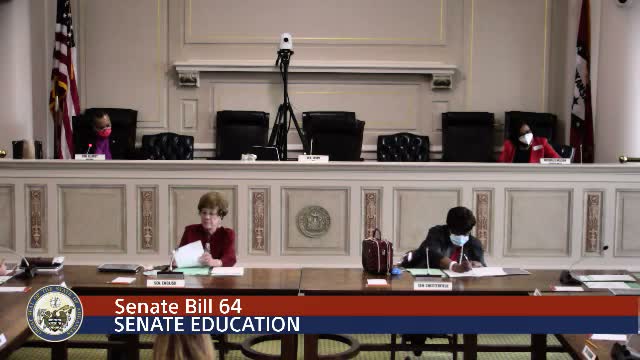
Senate panel approves ESA funding overhaul requiring three-year district plans and new reporting
Summary
The committee approved SB101 to rewrite ESA (Enhanced Student Achievement) categorical funding rules, require districts to submit three-year plans beginning July 2022, establish broad evidence-based expenditure categories, and set annual ADE reporting beginning October 2023; senators questioned transfer rules and 'use-it-or-lose-it' penalties.
The Senate Education Committee voted to advance SB101, a bill that restructures ESA (Enhanced Student Achievement) categorical funding and requires districts to prepare three-year plans for how they will allocate those funds beginning in July 2022. Dr. Pfeiffer of the Department of Education described categories intended to replace an open list of allowable expenditures and emphasized multi-year planning, accountability and annual reporting by ADE beginning October 2023.
Under the proposal, districts would budget ESA funds against broad, evidence-based categories, including enhanced staffing (recruitment and retention supplements), academic supports and interventions, social-emotional and behavioral supports, physical and mental health resources, early intervention and expansion of career/college programs. ADE told senators districts would still have flexibility but would need to justify transfers and budget percentages in their three-year plans.
Committee members raised concerns about a clause that limits carryover (an 85% minimum-expenditure expectation) and whether the law would force wasteful spending to avoid penalties. Dr. Pfeiffer said transfers and rulemaking would allow districts to explain legitimate carryover and that ADE plans to work with districts to avoid 'burning' funds. Senators also questioned whether administrators had outweighed classroom teachers in developing the list; Dr. Pfeiffer said the department consulted educational administrators, school finance people, teacher-leader advisory groups and state associations.
Supporters told the committee the three-year planning requirement is intended to reduce short-term, reactive spending and improve how districts demonstrate outcomes. Dr. Charity Smith, a consultant and college professor, testified she supported dedicated, planned funding to address the state's longstanding achievement gaps.
After questions and discussion, the committee adopted a motion to do pass on SB101; the chair announced the motion carried.