Get Full Government Meeting Transcripts, Videos, & Alerts Forever!
Get email alerts on the Committee Procedures topic
No spam. Unsubscribe anytime.
Senate Education Committee adopts operating rules, sets public comment and amendment procedures
Summary
At its organizational meeting, the Senate Education Committee adopted committee rules covering agenda scheduling, public comment procedures, mask and seating requirements, and a prohibition on verbal amendments; sponsors were instructed to submit bills early so fiscal impact statements can be prepared.
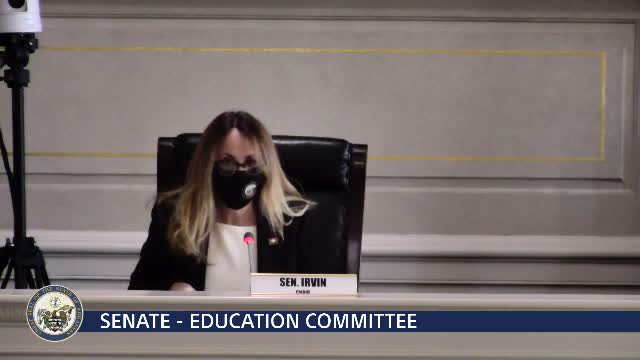
Sen. Missy Irvin opened the Senate Education Committee meeting and led the panel in adopting its operating rules, emphasizing orderly scheduling and public participation procedures. "A mask or other cloth face covering is required to be worn over the mouth and nose of every individual in committee rooms and public comment holding rooms at all times except when an individual is speaking directly into the mic," Irvin said as she reviewed health and safety protocols and meeting rules.
The committee placed an emphasis on scheduling and fiscal oversight: Irvin said bills assigned to the committee will appear on a referred list and sponsors should contact her to schedule consideration. She asked sponsors to meet a Thursday noon deadline so the consent agenda can be prepared and posted ahead of meetings, and said that agendas will be posted at least 18 hours before committee meetings. She also noted that fiscal impact statements are required before bills are considered, except for higher education measures.
On public participation, Irvin directed the public to the electronic sign-in posted with the agenda on the General Assembly website and to physical sign-in sheets at committee rooms. She said the online form gathers the bill number, name, title, organization, email and whether the commenter is for, against or providing informational testimony, but cautioned that "an individual's name appearing on a public comment sign in sheet does not guarantee that the individual will have an opportunity to speak during the committee meeting." Michelle Nelson, the committee analyst, walked members through the green folders containing agendas and a quick-reference order of priority for motions.
The committee clarified its approach to amendments: "We do not have verbal amendments in this committee," Irvin said. All amendments must be submitted in writing; substantial amendments that change bill language will be rescheduled so the public can review the revised text, while amendments that add cosponsors and do not alter the substance may proceed.
Sen. Linda Chesterfield moved to adopt the committee rules, and Sen. Charles Beckham seconded. The committee decided by voice vote; the chair declared, "Ayes have it," and the rules were adopted for the committee. The meeting concluded with Irvin encouraging members to review background materials, including a chronology of Arkansas public-education funding and structure prepared by the Bureau of Legislative Research, and then adjourning.
The committee meeting record shows staff will enforce assigned seating and room-capacity limits and that the chair will notify members by text of which bill numbers will be considered at the next meeting. Sponsors who wish to have their bills considered should contact the chair and ensure required fiscal impact statements are completed before scheduling.