Get Full Government Meeting Transcripts, Videos, & Alerts Forever!
Get email alerts on the Class Size And Student Support topic
No spam. Unsubscribe anytime.
Lawmakers press consultants for grade‑level class‑size data and student mental‑health staffing
Summary
During the adequacy review update, lawmakers urged collection of grade-level class‑size data after consultants said current Arkansas measures do not isolate core classroom sizes; members also pressed for clearer information on staffing for student mental‑health services and how alternative adequacy methods would change resource detail.
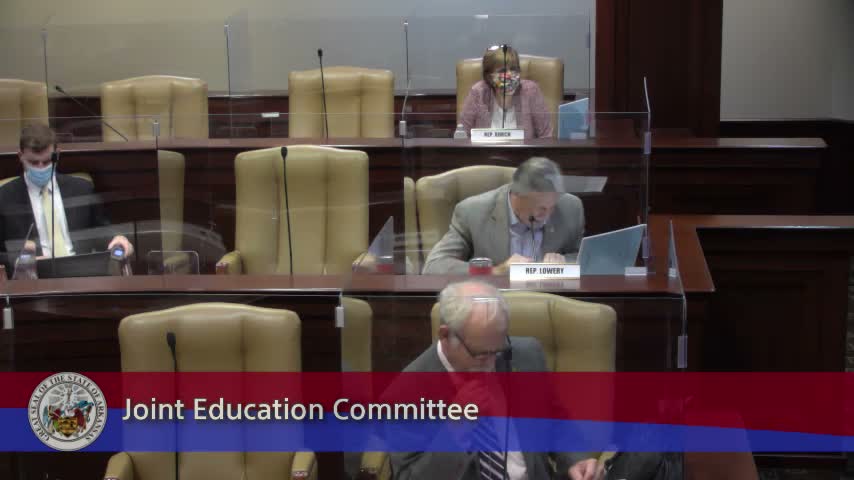
Lawmakers on the Senate Education Committee pressed consultants on Monday for more granular class‑size and mental‑health staffing data after a presentation on the state funding matrix and adequacy‑review methodologies.
Representative Lowery called current funded class sizes in lower grades "unconscionable," saying research favors much smaller early‑grade class sizes. "I'm not gonna put this word into your vernacular, but I'm just gonna say I think that that's unconscionable," Representative Lowery said, referring to the matrix's 23:1 K–1 ratio and class sizes that can reach 25:1. The consultant team responded that current Arkansas class‑size measures conflate core classroom teachers with special‑education and other instructional staff, limiting the ability to detect class‑size effects in their statewide regression analysis.
Consultants said WestEd ran linear regressions including student and district characteristics and found prior student performance to be the strongest predictor of next‑year outcomes; with current data they could not identify a statistically significant effect for class size. "They ran a linear regression that included all the variables around student characteristics, district or school characteristics, and then the variable of prior performance," Amanda Brown said. Justin Silverstein added that the consultants will include contextual clarifications in their written report so readers understand the analytic limits.
On student mental health, consultants told the committee the matrix contains no dedicated line for specialized mental‑health staff; some professional associations recommend combined staffing ratios (for counselors, nurses, psychologists, social workers) near 150:1 in elementary schools and about 180:1 in secondary schools. Consultants said districts frequently rely on outside community providers and ESA funds and that per‑student spending for mental health was not consistently available from BLR data.
Lawmakers asked the consultants whether alternative review methods (successful‑schools or cost‑function) would produce the same level of personnel detail as the evidence‑based approach. Consultants said successful‑schools and cost‑function approaches identify a per‑pupil base amount and are easier to update but do not yield the same explicit teacher/principal/FTE matrix that the evidence‑based or professional‑judgment approaches provide. "The evidence‑based approach identifies specific resources that are needed to meet the standard," Justin Silverstein said; "successful schools and cost function provide base amounts but not the same level of staff‑level specificity."
Next steps: members requested the consultants collect or confirm grade‑level class‑size data (core classroom counts for grades 1–3) if available, add contextual caveats to the report about analytic limitations, and return with recommendations on Nov. 9.