Get Full Government Meeting Transcripts, Videos, & Alerts Forever!
Get email alerts on the School Funding topic
No spam. Unsubscribe anytime.
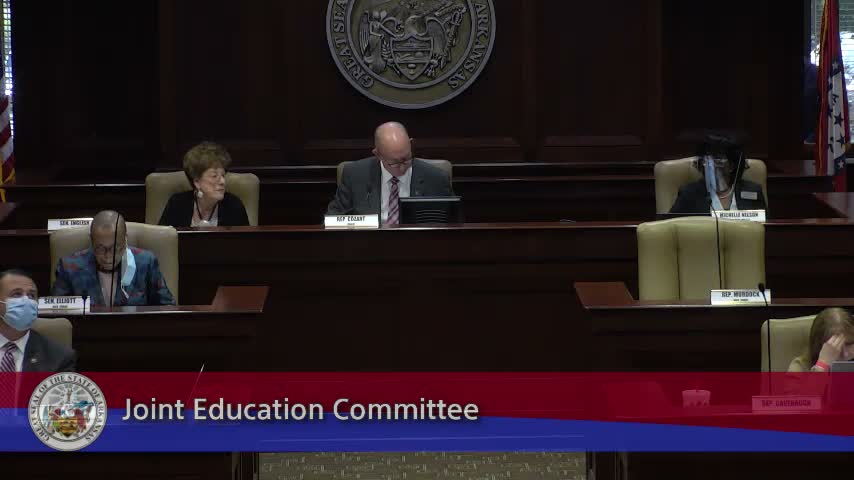
Senate education panel approves updated funding matrix and $15M teacher supplemental
Summary
The Senate Education Committee approved a revised school funding matrix and a new $15 million annual categorical aimed at preventing a post‑grant ‘cliff’ in teacher pay. Lawmakers debated equity, small‑district impacts and whether charter schools should be included in the distribution formula before passing the recommendation by voice vote.
The Senate Education Committee voted to approve a revised foundation funding matrix and an additional $15 million annual categorical to help school districts maintain teacher minimums and prevent a funding 'cliff.' Representative Evans moved to approve the matrix and categoricals as presented; the voice vote carried and the chair declared the motion approved.
The draft keeps most school‑level lines largely unchanged and recommends modest cost‑of‑living adjustments: committee staff presented teacher salary increases described in the matrix as averaging about 2.25% (a 2.3% average for school‑level personnel overall). Committee leadership said those increases are informed by consultant data and a CPU backup, but that the package also includes targeted money to help districts that will lose earlier, temporary grants.
The package includes a $15,000,000 annual 'enhanced salary' categorical designed to replace part of a previous $60 million, four‑year program and to reduce the risk that smaller or low‑wealth districts will be unable to pay newly mandated minimum teacher salaries. Chair (unnamed in the transcript) told members the $15 million is intended to go "directly to the teachers" (salary and benefits) in eligible districts and not to be deposited into the general per‑pupil bucket.
The committee heard detailed questions about how the supplemental would be allocated. Mike Hernandez, AIA executive director‑elect, described a draft distribution formula that combines three factors — the local value of a mill, average daily membership (ADM) and median household income — multiplied by a base per‑student amount (the working draft used $11.50) and scaled to produce roughly $15 million. Hernandez said the formula was designed to target small, low‑wealth districts and gave examples showing some small districts would receive several tens of thousands of dollars annually under the draft.
Department of Education Secretary Johnny Key told the committee that some related evidence‑based grant programs in the matrix operate as reimbursement matching grants: districts spend and apply for repayment; the committee was told such grants are typically prorated when requests exceed available funds.
Lawmakers pressed multiple policy and equity questions. Representative Lauer warned that shifting money out of the matrix into categorical dollars can feel like a series of "band‑aids" and urged long‑term structural fixes; Representative Lowery and others raised concerns that increasing principal pay at higher percentages than teacher pay can create perverse incentives. Several members argued the underlying matrix still favors larger districts and asked whether the supplemental formula should include charter schools, which do not levy millage; presenters said the draft formula currently mirrors the earlier $60 million approach and does not include charters because the millage/value component does not apply to them.
Richard Abernathy, outgoing executive director of the Arkansas Association of Educational Administrators, said the proposal aims to help the smallest, poorest districts close salary gaps while acknowledging the complexity of equitable funding. He also introduced Hernandez as his successor for the association's leadership role.
The committee approved the matrix and the categoricals by voice vote; the transcript records the motion, a second and the chair's statement that the motion "carries," but it does not include a roll‑call tally or list of individual aye/no votes. Committee members and presenters indicated the numeric distribution formula and eligibility details will be refined in staff follow‑up and future committee work before the package is finalized during the upcoming session.
What happens next: committee staff will share the spreadsheets and the draft formula with members for review; members said the distribution method and charter inclusion can be revisited during committee work in the months before the legislature finalizes budget decisions.