Get Full Government Meeting Transcripts, Videos, & Alerts Forever!
Get email alerts on the Adequacy Study topic
No spam. Unsubscribe anytime.
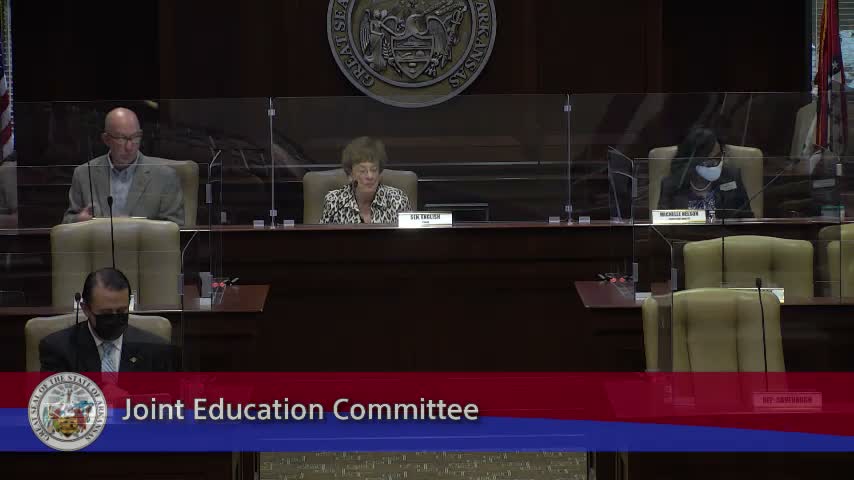
Consultants brief Senate Education Committee on K–12 adequacy study, set Nov. 9 recommendations date
Summary
Consultants for the legislative adequacy review presented a detailed review of Arkansas's funding "matrix," highlighted areas that align with national research and areas that differ, and said they will deliver recommendations on Nov. 9 and a draft report for adoption on Nov. 14.
Consultants delivering the legislative adequacy review told the Senate Education Committee on Monday that they will present recommendations on Nov. 9 and return for consideration of a draft report on Nov. 14.
The consultants reviewed the state’s funding matrix line-by-line and the data sources informing it, including district staffing and expenditure data from the Bureau of Legislative Research (BLR) and the Arkansas Department of Education (ADE), educator panels, stakeholder surveys, case studies and a national literature review. "We will present recommendations at the November 9 meeting," one presenter said.
Why it matters: Arkansas uses an evidence‑based matrix to define the base resources for schools; that approach dates to court-driven reviews and reforms following the Lakeview decision. The consultants said the matrix produces explicit, auditable resource levels such as class‑size and staffing ratios that the Legislature can review, but that some topics have emerged that the matrix does not currently address.
Key findings and figures: consultants summarized current funded ratios and amounts in the matrix and how they compare with prior Arkansas studies and other states. Examples the consultants cited include kindergarten funded at 20:1, K–1 at 23:1, grades 4–12 at 25:1; special‑education staffing modeled at 2.9 FTE for a 500‑student prototype (prior studies suggested up to about 6.6 FTE); and a funded teacher salary level of about $68,000 (including benefits) versus an average reported teacher salary of about $51,000. They reported technology at $250 per student and instructional materials at roughly $190 per student in the matrix, with districts on average spending somewhat more.
Consultants framed tradeoffs among four broad review methods: evidence‑based and professional‑judgment approaches produce detailed resource matrices tied to state standards, while successful‑schools and cost‑function (statistical) approaches produce base per‑pupil amounts more easily but with less personnel‑level detail. "The evidence‑based approach identifies specific resources that are needed to meet the standard," one presenter said; "successful schools and cost function provide base amounts but not the same level of staff‑level specificity."
Next steps and process: consultants said they will add contextual caveats and clarifications to their written report where the analysis is limited by available data, and return with specific recommendations in November. Committee members requested additional grade‑level data disaggregations (for example, core classroom class sizes for grades 1–3) and asked consultants to confirm any available district data with ADE before final recommendations.
What was not decided: The presentation did not change the matrix or adopt new funding levels; consultants emphasized the Legislature defines adequacy and that their role is to present findings and recommendations for the committee’s consideration.
The committee scheduled follow-ups: consultants’ recommendations on Nov. 9 and consideration of adoption of a draft report on Nov. 14.