Get Full Government Meeting Transcripts, Videos, & Alerts Forever!
Get email alerts on the School Reopening topic
No spam. Unsubscribe anytime.
DESE clarifies reopening guidance and technology plans as lawmakers press broadband and ESA questions
Summary
DESE counsel and staff told the committee districts should make on‑site instruction available five days a week while offering hybrid/virtual options; members pressed on broadband mapping, $100 million allocations and whether ESA and CARES funds can be used for devices and ongoing technology.
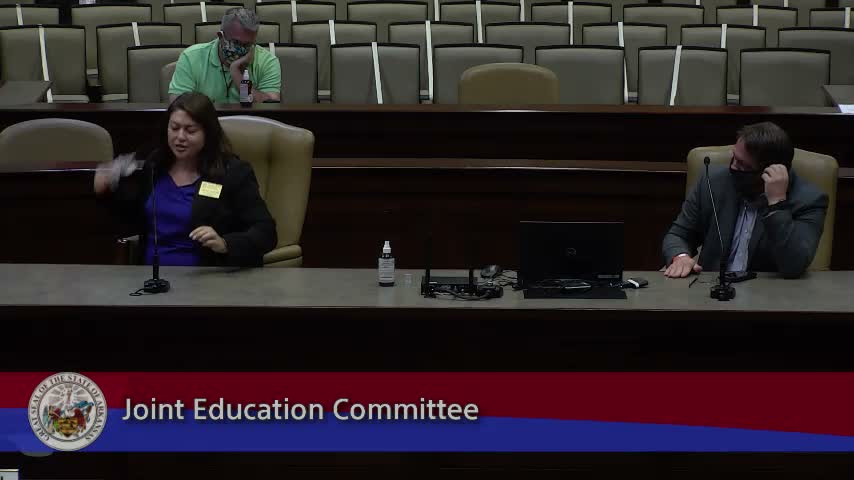
State education officials told the Senate Education Committee that districts must make on-site instruction available as a primary option but may offer hybrid or virtual alternatives for families, and staff described statewide device and broadband efforts.
Courtney Salasford, counsel for the Department of Education, said the department is "continuing to have those conversations" with the governor's office about flexible schedules and equitable access. Ivy Pfeffer (DESE division of elementary and secondary education) told the committee districts should provide an on‑site option for students five days a week ‘‘as needed’’ while still offering blended or remote options to meet family needs and local public health guidance.
On technology and broadband: Greg Rogers (Department of Education) said districts will receive devices negotiated at the state level and that many devices will be drop‑shipped to districts for local distribution. He confirmed ESA funds are an allowable funding source for technology and cautioned that CARES/ESSER funds are one‑time dollars that can be used for purchases but are harder to use for ongoing services. Senators asked whether the governor’s $100 million broadband allocation would target underserved rural areas; DESE staff said they are part of interagency discussions and expect mapping of underserved areas to guide investments.
Why it matters: reopening guidance affects whether districts can implement hybrid schedules, provide meals and services, and manage staff assignments; device and broadband allocations affect remote learning access for students without reliable home internet.
What the committee asked for: clearer distribution details for state‑purchased devices and hotspots, an update on broadband mapping and eligibility for the governor’s broadband funds, and tracking of district ESSER and ESA technology expenditures.