Get Full Government Meeting Transcripts, Videos, & Alerts Forever!
Get email alerts on the Adequacy Report topic
No spam. Unsubscribe anytime.
BLR presents draft adequacy report; lawmakers press for matrix, class‑size and facilities fixes
Summary
The Bureau of Legislative Research delivered a preliminary adequacy draft explaining funding sources, the matrix and accountability indicators; legislators asked for modeling on staffing, small‑school impacts, transportation funding alternatives and an updated facilities inventory.
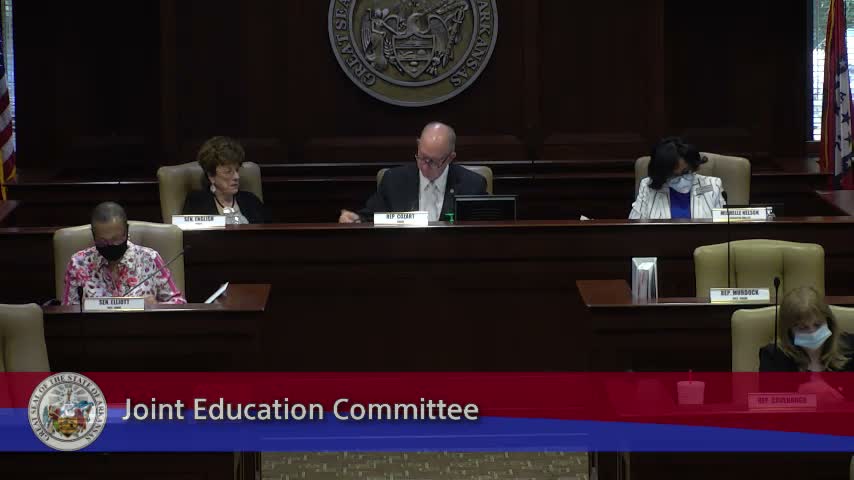
The Bureau of Legislative Research presented a preliminary draft adequacy report to the Senate Education Committee and members spent the meeting probing the matrix that drives state K–12 funding.
"This is your report, not BLR's report," Julie Holt told the committee when she handed out the draft and described the report’s structure—state funding sources, the matrix, categoricals, facility funding and accountability indicators. She urged members to treat the draft as a starting point for deliberations and said BLR had consolidated two years of studies and public testimony into a single narrative for committee use.
Members raised several persistent concerns: whether the matrix’s single size model (historically anchored at a 500‑student model and later adjusted to 350 in practice) disadvantages small or isolated districts; whether class‑size and K–3 staffing should be reallocated; and whether transportation funding should be moved from a per‑student model to a per‑seat or miles‑driven approach. Representative Lowery and others asked BLR to model targeted adjustments so the committee can see the winners and losers and the cost to implement changes.
Facility oversight drew attention. Laurie Bowen (BLR) said an independent statewide inventory of school buildings was last completed in 2004 and has not been replicated. "They do have inspection reports… SchoolDude system," she said, but said BLR does not have a current independent inventory comparable to the earlier study. Lawmakers asked whether the committee should resume facility tours or reinvigorate a facilities oversight subcommittee.
Members also debated accountability labels. A proposal to replace single A–F letter grades with a more granular scoring system—one that highlights subgroup performance such as special education or poverty outcomes—was described as a separate work item for the committee to return with options.
Next steps: BLR was asked to produce component‑level CPI impacts on matrix line items, disaggregated staffing data (by district size and by race/gender where available), and cost estimates for alternatives on transportation and staffing. Members set Act 757 (2019) follow‑up and facilities discussions for the next meeting.