Get Full Government Meeting Transcripts, Videos, & Alerts Forever!
Get email alerts on the School Reopening topic
No spam. Unsubscribe anytime.
Arkansas Education Leaders Outline 'Ready for Learning' Plan, Leave Many Operational Decisions to Districts
Summary
State education and health officials told the Senate Education Committee they favor returning students to classrooms where possible and described the Arkansas Ready for Learning plan, while leaving mask mandates, transportation rules and many operational choices to local districts; officials also expanded K–8 diagnostic testing options and flagged broadband, staffing and mental-health gaps.
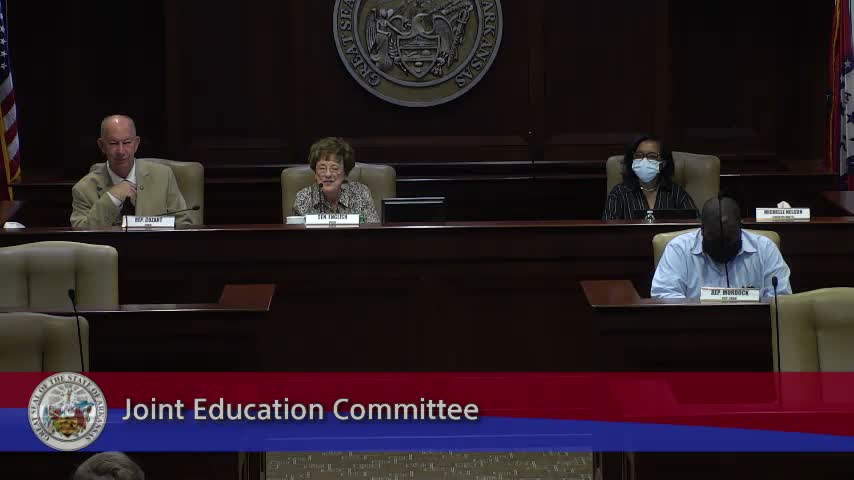
Secretary Johnny Key and health officials presented the Arkansas Ready for Learning plan to the Senate Education Committee on July 7, emphasizing a state-level goal of returning students to on-site instruction where feasible while offering districts flexibility to adapt plans to local conditions.
Key told the panel the plan centers students and identifies six systems districts should prepare — from health protocols to blended-learning systems — and is supported with federal ESSER funds and state resources. He said the state lacked some assessment data after last year’s interrupted ACT Aspire administration and is expanding diagnostic assessments at districts’ option from K–2 to K–8, to be administered three times a year.
The plan stops short of statewide mandates on several operational issues. On masks, Key said the state recommends mask use for children age 10 and older but has not required masks; Don Adams of the Arkansas Department of Health said the department “would encourage” districts to require masks but that districts retain authority to set local policy. Key described the state’s approach as providing guidance and assistance while allowing districts and local boards to adopt rules appropriate for their size and geography.
Committee members raised repeated concerns about equity and readiness. Several legislators described broadband ‘deserts’ and families without reliable internet, noting some students rely on parking‑lot Wi‑Fi or bused hotspots. Key said the department will promote layered solutions — temporary fixes and local provider deals, sometimes paid with CARES or ESSER funds — but acknowledged no single statewide technical fix exists.
Members also pressed officials on staff safety, supplies and testing. Key said centralized purchasing through regional co‑ops (identified in testimony as logistics hubs) would provide PPE and sanitizers for districts; Adams defined a close contact as roughly within 6 feet for 15 minutes (cumulative) and said close contacts should quarantine 14 days and be tested where appropriate. Key said the department has embedded staff working with public‑health teams to coordinate guidance daily.
On special education and mental‑health services, Key and Ivy Pfeffer (Department of Education) said special‑education staff and IEP teams are working with districts to ensure therapies continue where possible, and that the state will encourage districts to use ESSER funds and available SAMHSA‑funded resources (Arkansas Aware) for increased mental‑health needs.
The department said it has received nearly 190 district plans for review and is adapting monitoring processes; staff counts and precise monitoring capacity were not specified and will be provided on request. Key also told members that waivers requested from the state board (referred to in testimony as “12 40 waivers”) will require a district support plan as a condition of access, described as a contractual assurance of appropriate waiver use for the school year.
Committee members asked whether the department will impose standardized schedules or mandates (for example, A/B cohorts or bus staggering). Key and staff said those are typically local feasibility decisions and that the department’s role is guidance, technical support and, where necessary, targeted flexibility or funding to meet local needs.
What happens next: the department will continue to refine guidance in consultation with the health department, provide additional details to legislators on waivers and monitoring capacity, and support districts as they finalize and submit their local Ready for Learning plans.
Sources: committee testimony by Secretary Johnny Key and Department of Health representative Don Adams at the July 7 Senate Education Committee hearing.