Get Full Government Meeting Transcripts, Videos, & Alerts Forever!
Get email alerts on the Teacher Salaries topic
No spam. Unsubscribe anytime.
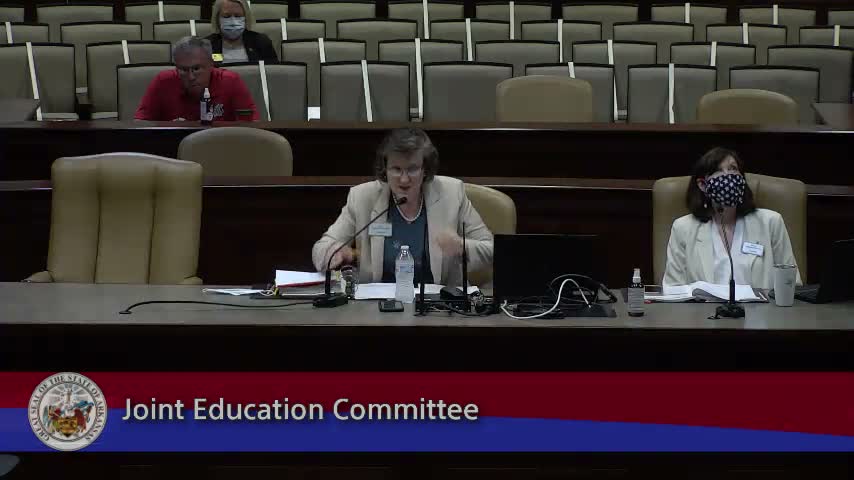
Senate Education Committee hears report showing Arkansas teacher salary rankings have slipped; members press for follow-up on matrix spending
Summary
State Bureau staff told the Senate Education Committee that Arkansas’s average teacher salary ranking declined in recent NEA and SREB comparisons, even after cost‑of‑living adjustments; members asked for more detail on how foundation and matrix funds are spent and whether benefits or hiring practices mask the problem.
Lori Bowen, a policy analyst in the Bureau of Legislative Research, told the Senate Education Committee that Arkansas’s average teacher salary ranking has declined in recent national and regional comparisons and that cost‑of‑living adjustments improve but do not erase that decline. Bowen said the bureau analyzed NEA salary data and compared Arkansas to SREB and surrounding states, adjusted state salaries using a Missouri Economic Research and Information Center cost‑of‑living index, and reviewed district minimum and average schedules and adequacy survey responses from educators.
Bowen summarized several findings: Arkansas’s NEA‑reported average salary rose modestly in 2019 but still slipped in rank versus other states; applying the COLA index improved Arkansas’s relative standing but produced a year‑over‑year decline; district minimum schedules show wide variation, with 71 districts at the state minimum in the current year; and districts with lower adopted minimums tend to have fewer FTEs, smaller enrollments and lower achievement and higher shares of students eligible for free and reduced‑price lunch.
Bowen also described the 2019 legislative actions that changed statutory minimums: “In 2019 the General Assembly enacted Act 170, the Teacher Salary Enhancement Act,” and a companion funding measure, Act 877, which created a $60 million appropriation and fund transfer intended to support educator compensation and help districts reach a $36,000 minimum for bachelor‑degree prepared teachers with zero years’ experience.
Committee members pressed staff on several policy and practice questions. Senator Elliott argued that adding more salary steps may not be an effective long‑term strategy and urged the committee to consider targeted raises over unbounded step growth: “If all we do is fund steps … the only way a teacher who’s been there, say, for 20 years gets any kind of raise is to add another step,” he said. Several members asked whether the salary comparisons include non‑salary compensation such as employer health contributions; Bowen replied that the NEA and SREB comparisons use salary figures only and do not include benefits.
Multiple senators and representatives asked for follow‑up work. Requests included: (1) a breakdown of how foundation and matrix dollars are actually spent at the district level, (2) testimony or follow‑up from practicing superintendents about spending choices and mandates, (3) further analysis of experience effects (whether loss of mid‑career teachers is driving average‑experience declines), and (4) clarification about charter school waivers that allow some charters to pay below the state minimum. Bowen said the bureau would pursue additional data and could bring superintendents or deeper coding breakdowns in subsequent briefings.
The committee did not take formal action on policy changes at the meeting; members framed the session as analytical groundwork for potential future policy decisions.