Get Full Government Meeting Transcripts, Videos, & Alerts Forever!
Get email alerts on the Educator Compensation topic
No spam. Unsubscribe anytime.
Superintendents warn teacher‑pay boost will create a long‑term 'cliff' for small districts
Summary
Superintendents from several small districts told the committee recent salary increases and minimum‑wage hikes have improved pay now but will create unsustainable costs when temporary state funding sunsets; they described program cuts and multi‑year shortfalls of several hundred thousand dollars in concrete district projections.
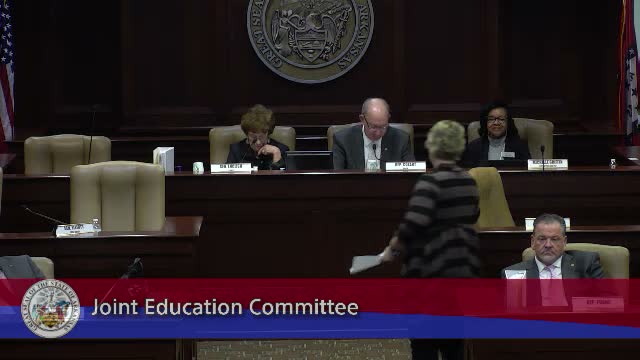
Superintendents from small and midsize Arkansas districts told the Senate Education Committee that the state’s recent educator compensation increases and voter‑approved minimum‑wage rises have immediate benefits for staff but create a looming fiscal cliff for some districts when one‑time or biennial funds end.
"We have to cut something, so what are we gonna do?" Beth Shoemake, superintendent of Magazine School District, told the committee as she described reductions already taken (a 5% budget cut and eliminated field trips) and potential future cuts to counselors, nurses and the district wellness center if additional revenue does not materialize. She said the district’s cumulative cost exposure over a four‑year window could reach into the hundreds of thousands of dollars.
Wendy Faucet (Paris) and Tracy Streeter (Hamburg) provided similar local analyses. Streeter provided a line‑item example showing the cumulative multi‑year cost to meet pay and minimum‑wage changes would outstrip state support in several years. In one example she cited a total four‑year figure "over $700,000" for a small district when accounting for salary raises, minimum‑wage increases and other employer costs; Paris and Magazine presented comparable multi‑year shortfalls in the materials they shared with the committee.
Superintendents asked the committee to consider targeted approaches: phased funding, a line item for districts below a salary floor, temporary flexibility on categorical funds or other ways to prevent a sudden loss of services and staff when state support sunsets. Committee members discussed options including a standardized salary schedule, targeted supplemental aid to districts below the floor, or modifying tax structures; several members urged that the adequacy study examine these distributional and structural questions.
The committee did not take action at the hearing; members asked superintendents and DESE staff to continue providing detailed cost projections so lawmakers can evaluate possible options before the next biennial budget cycle.