Get Full Government Meeting Transcripts, Videos, & Alerts Forever!
Get email alerts on the Adequacy Study Methodology topic
No spam. Unsubscribe anytime.
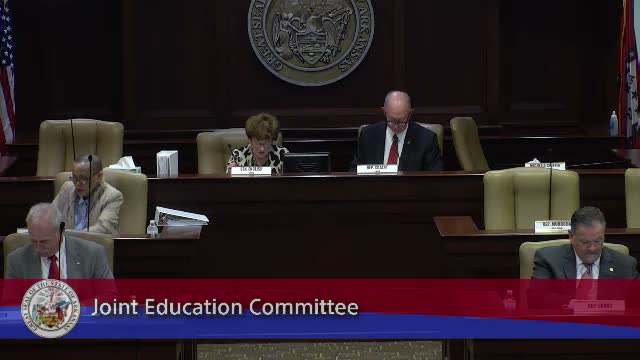
Senate Education Committee grills consultants on adequacy study outreach, site choices and case‑study selection
Summary
Consultants from APA Consulting and WestEd outlined plans for educator panels, evening stakeholder listening sessions and 12–16 case studies using ACT Aspire growth data; lawmakers pressed them on rural and Delta representation, transportation and filters that could exclude notable local growth examples.
Consultants from APA Consulting and WestEd told the Senate Education Committee that they will hold regional educator panels, evening stakeholder listening sessions and a statewide survey as part of an adequacy study designed to inform Arkansas’ K‑12 funding matrix and related recommendations.
Justin Silverstein of APA Consulting, introduced as the lead consultant, said the work will shift next month from process to findings: “This will be the last time where we don't give you results of something,” he told the committee, describing plans for targeted daytime panels of school leaders and teachers and broader evening sessions for community members.
Jason Willis, director of strategy and performance at WestEd, described the case‑study selection method the team will use: the study will use a hierarchical statistical model and ACT Aspire combined growth data to predict school outcomes, then “conduct those case studies in 12 to 16 successful schools across the state,” he said. The consultants said they will apply filters—including a minimum accountability‑rating threshold and minimum concentrations of English‑learner or low‑income students—and then stratify by region and school level to select schools that outperform expectations.
Several lawmakers pushed back on the proposed five‑hub outreach model (Little Rock, Fayetteville, Jonesboro, Hope and Dumas/Stuttgart). Senator Chesterfield urged the team to account for long bus rides and lack of internet access in some areas, saying, “There are some kids who are on the bus for hours and it will have a deleterious impact on their ability to learn.” Committee members said five hubs risk underrepresenting rural Delta communities and urged extra outreach via co‑ops, associations and local superintendents.
Consultants acknowledged the tradeoffs. Willis said the quantitative model covers all roughly 1,200 Arkansas schools and that the 12–16 site visits are a qualitative follow‑up to a statewide quantitative analysis. Raifu Duodoye of WestEd explained the choice of growth measures: the team will use ACT Aspire growth data because, he said, it “correlates less with socioeconomic status” and helps identify schools that exceed expectations given their demographics.
Lawmakers repeatedly asked whether the consultants would include schools that show substantial improvement (for example, moving from F to C) even if their accountability grade remains modest. The consultants said a “gut‑check” step will follow automated selection and that they will revisit filter rules if the initial list appears to omit important growth cases.
The consultants said outreach planning—working with the Bureau of Legislative Research, the Department of Education and district associations—will include publicity and targeted invitations to maximize a geographically and demographically diverse turnout for both panels and the statewide survey. They told the committee they will return with initial findings at the next scheduled meeting.
Next steps: consultants said they will refine site choices, finalize outreach plans with committee staff and the Department of Education, and produce initial study findings at the committee’s next presentation.