Get Full Government Meeting Transcripts, Videos, & Alerts Forever!
Get email alerts on the Adequacy Study topic
No spam. Unsubscribe anytime.
Consultants lay out 10‑month timeline for statewide adequacy study; first findings due in April
Summary
Consultants Justin Silverstein and Amanda Brown presented the scope, methods and month‑by‑month timeline for an educational adequacy study, saying data collection is underway with the Department of Education and the team will begin delivering literature reviews and initial findings in April, with a draft report in November and a final report in December.
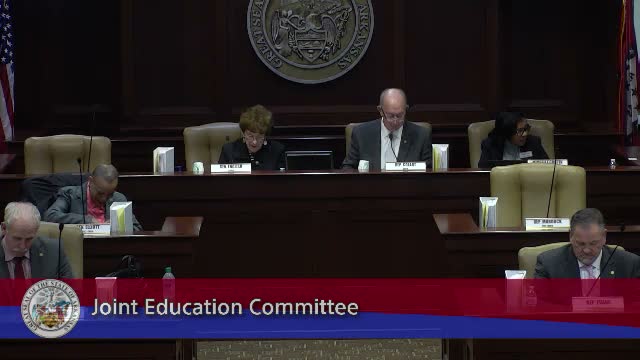
Consultants working on the Legislature’s educational adequacy study told the Senate Education Committee that data collection is underway and the review will unfold in stages over the next 10 months.
"It's great to be here kicking off the study with you all," Justin Silverstein said as he introduced the project and the team’s plan to take full datasets directly from the Department of Education. He told the committee the team expects to begin presenting initial findings in April and will bring more substantive analysis each month through October, with a draft report in November and a final report in December.
Amanda Brown, who outlined the study’s methods, said the work will combine fiscal and performance data analysis, literature reviews, 12–16 case studies of schools that are sustaining strong results for high‑need students, in‑person educator panels in at least four regions of the state, and a district survey to fill remaining data gaps. "We will be looking at all 50 states regardless of what comparison groups we select," she said of the literature review and benchmarking approach.
Silverstein said a key objective is to avoid duplicating reports already prepared by the Bureau of Legislative Research (BLR): "One of our key goals is not to make anything repetitive. We do not want to bring something to you that they've already brought to you," he told the committee. The consultants said they are coordinating with BLR staff to identify and minimize overlap.
Committee members pressed the team on public engagement and representativeness. Several members asked whether classified employees—bus drivers, custodial staff and clerical workers—would be included in panels and surveys; Silverstein and Brown said open listening sessions are open to any educators in the region and the statewide stakeholder survey will be widely publicized so business leaders, parents and other residents can respond. They said survey results will be presented with clear caveats about respondent composition.
The consultants will return in March with proposals for comparison states and the locations and schedules for educator panels. The committee asked staff to poll members who were not present and to provide the consultants with the committee’s selections.
Next steps: consultants will map and finalize comparison groups in March, begin educator panels and surveys in April–May, bring county/district and proxy analyses in May–June, synthesize size‑and‑space analyses in July, integrate educator panel findings and prior adequacy recommendations in August–October, and deliver a draft report in November ahead of a final December report.