Get Full Government Meeting Transcripts, Videos, & Alerts Forever!
Get email alerts on the Education Stakeholder Testimony topic
No spam. Unsubscribe anytime.
Rural educators, school boards and advocates press for systemic change and community schools to help high-poverty students
Summary
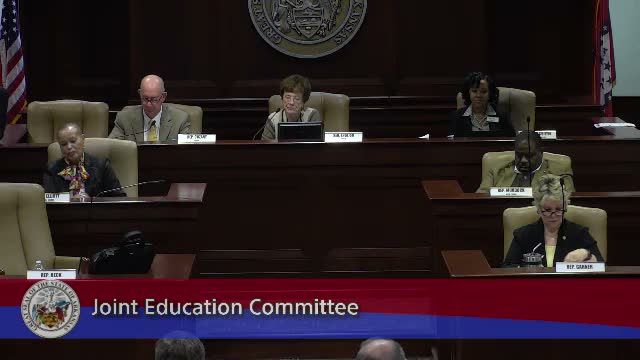
Representatives of the Arkansas Rural Education Association, Arkansas School Boards Association and Forward Arkansas told the Senate Education Committee that ESA money alone has not closed gaps and recommended systemic reforms, class-size/staffing studies, and piloting community-school models in persistently low-performing high-poverty schools.
Speakers from multiple education groups urged lawmakers to pair money with clearer purpose, staffing support and community-based wraparound services during testimony to the Senate Education Committee.
Dale Query, executive director of the Arkansas Rural Education Association, described rural districts'challenges with scale, staffing and special education costs and asked lawmakers for flexibility and targeted adjustments for small districts. "We represent about 200 and some odd school districts, 375,000 kids, and we want to work with you," Query said, urging systemic change responsive to rural conditions.
Tony Prothroat, director of the Arkansas School Boards Association, and Dan Jordan highlighted gaps between statutory staffing standards and the funding matrix, recommended studies on class size and staffing adequacy, and called for an on-the-ground assessment of facilities. Prothroat and Jordan also urged the committee to monitor the financial implications of the ESA allowable-use sunset and evolving special-education reimbursement rules.
Jerry Derlikowski, research director at Forward Arkansas, and Thurman Green recommended the state encourage or require persistently low-performing D/F schools to use ESA and federal funds to implement community-school models that coordinate student and family supports. "Community schools can be set up with existing ESA and federal funding," Derlikowski said, and he pointed to research showing improved attendance, behavior, parental engagement and graduation outcomes in community-school models.
Committee members from both parties responded with follow-up questions about broadband access, teacher salary scales and whether measures such as a four-day week or salary-schedule adjustments are being used by districts to reduce costs. Senator Elliott urged a bipartisan, statewide effort to pursue systemic change rather than incremental programs: "Programs cannot fix this without systemic change," she said.
The committee received written testimony and asked presenters to provide additional district-level data; no formal votes followed the testimony session and the meeting adjourned.