Get Full Government Meeting Transcripts, Videos, & Alerts Forever!
Get email alerts on the Teacher Recruitment Funding topic
No spam. Unsubscribe anytime.
Teach For America leaders urge recurring state funding to restore Arkansas placements
Summary
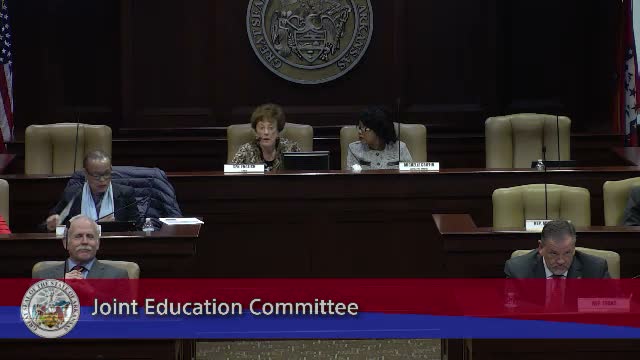
Teach For America Greater Delta representatives told the Senate Education Committee that Arkansas has lost capacity for first‑ and second‑year teachers after state funding dropped and asked lawmakers to consider recurring appropriations to restore positions and coaching supports.
Ron Nurnberg, co‑leader for Teach For America (TFA) Greater Delta, told the Senate Education Committee that TFA has placed more than 1,000 teachers in Arkansas classrooms since 1991 and that alumni have taken leadership roles across sectors. He and Mia Meadows, TFA’s chief impact officer for the Arkansas and Mississippi region, briefed members on current core numbers (about 28 first‑ and second‑year teachers in six rural districts this year) and long‑term alumni outcomes.
Nurnberg said Arkansas lacks the recurring state funding other contiguous states supply and argued that appropriation stability is necessary to recruit and keep teachers in high‑needs districts. He described the programmatic investment as approximately $27,000 per core member over a two‑year development window and said other states offset a large share of that cost; for example, Mississippi has historically contributed large sums per year toward TFA regional budgets. Nurnberg told legislators: "Arkansas has never had a recurring funding stream that creates the sustainability" TFA needs.
Committee members questioned credentialing, turnover and the program's comparative value. TFA representatives said candidates arrive with four‑year degrees, are coached and supported for two years while holding provisional licenses, and then become eligible for standard state licenses after that period. Mia Meadows described recent outcomes, saying classrooms with TFA teachers averaged roughly 1.3 years of student academic growth last year, based on TFA's internal measures for current core members.
Some senators raised broader concerns about relying on alternate pathways versus investing in systemic improvements. Senator Elliott cautioned against treating TFA as a long‑term substitute for comprehensive teacher‑preparation and retention reforms; other members, including local mayors and past legislators, emphasized TFA’s contribution to communities with persistent staffing shortages. Several members signaled willingness to consider state funding in the upcoming fiscal session.
Next steps: TFA asked the legislature and the governor to consider recurring appropriations in the next budget; members noted the fiscal session in April as the next opportunity for an appropriation decision.