Get Full Government Meeting Transcripts, Videos, & Alerts Forever!
Get email alerts on the Isolated Funding topic
No spam. Unsubscribe anytime.
Report: isolated and special-needs isolated funding supports remote districts but participation has declined
Summary
A Bureau of Legislative Research briefing explained isolated, special-needs isolated (S&I) and S&I transportation funding streams, noting ~16 districts received isolated funds in 2019 and that closures have reduced the number of isolated school areas since 2006.
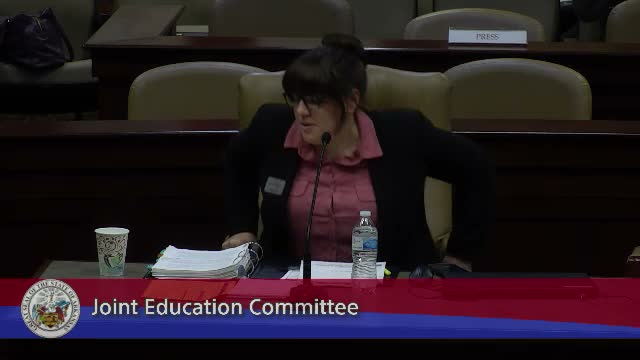
Adrienne Beck of the Bureau of Legislative Research briefed the committee on isolated funding programs that compensate districts with geographic challenges, low student density or long travel distances to neighboring high schools.
Beck summarized the statutory history: isolated funding dates to 1983; Act 60 of 2003—the Public Education Reorganization Act—changed consolidation rules and led to Act 65 (02/2003) that protected previously identified isolated areas and set per-student isolated funding levels. Special-needs isolated (S&I) funding (Act 1452, 02/2005) created multipliers (20%, 15%, 10% and 5% of foundation funding) for qualifying districts; S&I transportation (Act 1052, 02/2007) provides an additional distribution when funds remain.
Using 2019 as an example, Beck said roughly $7.89 million is appropriated for isolated funding; after statutory distributions there was approximately $3.6 million available for S&I transportation, which in 2019 resulted in 12 districts receiving $300,250 each in transportation allocations. She noted the number of districts receiving any isolated or S&I funds declined from 40 in 2006 to 29 in 2019 and that closures of isolated schools are a major driver of that trend.
Beck said isolated and S&I recipients tend to be rural, cover larger square-mile areas with low student density, have higher transportation expenditures per pupil and a higher percentage of students eligible for free or reduced-price lunch. She also noted that isolated funding constitutes a sizable share of state funding for a few districts (Ozark Mountain, Jasper, Hillcrest and Deer Mountain Journal are cited in the report as examples where isolated funding makes up more than 11% of state funding; one district exceeded a quarter of its state funding from isolated sources).
Beck concluded with a review of how other states approach similar funding and noted Arkansas—s approaches are broadly consistent with practices in many states that provide per-student amounts or multipliers for small/sparsely populated or remote districts.