Get Full Government Meeting Transcripts, Videos, & Alerts Forever!
Get email alerts on the Education Committee Roundup topic
No spam. Unsubscribe anytime.
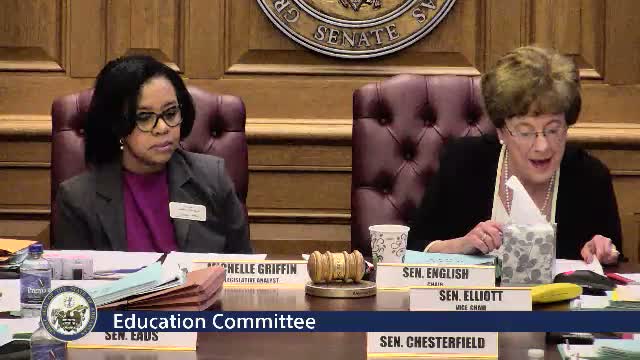
Senate Education Committee advances broad package of K–12 and higher‑education bills
Summary
The Senate Education Committee moved multiple bills forward on publishing of school notices, audits, school/highway coordination, scholarships and technical reporting changes, adopting several sponsor amendments and approving bills by voice vote.
The Senate Education Committee on an extended agenda adopted a series of technical and policy measures affecting K–12 schools and higher education.
Committee members approved amendments to House Bill 16-26 that removed a 15‑student mandate and instead directed the Department of Education to identify and approve a high‑school credit course; the amendment sponsor said the language came from the Department of Education and the committee adopted it by voice vote before passing the bill as amended.
Lawmakers also advanced House Bill 19-34 to standardize financial audits on a regulatory basis after testimony from the Arkansas Association of Educational Administrators that federal guidance treats multiple audit options as a risk factor; witnesses said most districts already use the regulatory option. The panel passed bills clarifying publication requirements for school budgets and bond sales (House Bills 1701 and 1702) so districts without a local paper may place required notices in an out‑of‑county paper that circulates within the district.
The committee approved House Bill 18-47, which encourages early coordination between school districts and the Arkansas Department of Transportation during planning for new schools so state highway impacts (for example, turn lanes or waiting lanes) can be evaluated and programmed into the DOT’s multi‑year plan. DOT witness Gil Rogers said coordination is voluntary and districts retain discretion over any funding partnership.
Members also moved forward a higher‑education vehicle to support graduate medical education (House Bill 17-85) and technical bills refining reporting definitions for the Arkansas Public School Computer Network (ABSCAN) and related administrative fixes.
Votes at a glance: [committee actions as recorded on the floor] - House Bill 16-26 (as amended): amendment adopted; bill passed by committee. - House Bill 17-47 (American heritage documents): passed by committee. - House Bill 19-34 (audit basis): passed by committee. - House Bill 18-47 (school/highway coordination): passed by committee. - House Bills 1701 & 1702 (publication of budget/bond notices): passed by committee. - House Bill 17-85 (GME residency vehicle): moved forward; no funding attached. - HB1404, HB1498 and similar technical bills: passed by committee.
Why it matters: The package includes a mix of procedural fixes and items that affect curriculum choices, local publication rules for public notices, planning for school construction and the mechanics of school audits. Several bills were presented as clarifications rather than new mandates; sponsors repeatedly said they intended to keep local discretion in place where appropriate.
The committee advanced the bills by voice votes or unanimous consent in most cases; several measures drew only brief public comment.