Get email alerts on the Collective Bargaining topic
No spam. Unsubscribe anytime.
Senate panel approves bill removing bargaining exemption for teacher lunch, planning minimums amid heavy opposition
Summary
SB 392 removes an exemption that allowed districts engaged in collective bargaining to avoid statutory minimums for duty-free lunch and planning time; the bill passed committee despite extensive opposition from teachers and associations who argued it undermines local bargaining and protections.
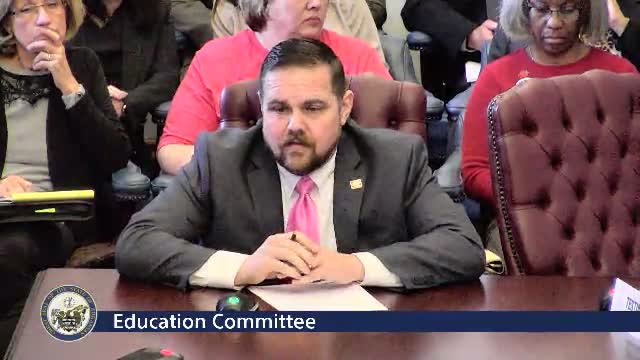
Little Rock — The Senate Education Committee voted to advance a bill that would eliminate a code exemption allowing school districts engaged in collective bargaining to avoid statutory minimums for duty-free lunch and planning time.
Sen. Bob Ballinger, who sponsored SB 392, said the legislation removes an exemption so that statutory floors (a 30-minute duty-free lunch and a 40-minute daily planning period) apply universally irrespective of local collective-bargaining agreements. Ballinger said the statute should set a minimum floor, not an exemption that creates inconsistent minimums across districts.
The bill drew extensive public testimony from teachers and associations. Michelle Lynch of the Arkansas State Teachers Association and Teresa Knapp Gordon, president of the Little Rock Education Association, urged the committee to reject the bill, saying local collective-bargaining agreements frequently secure conditions that exceed state minimums and that the bill could undermine organized representation. Testimony included personal accounts of negotiated improvements in Little Rock and statements that unions do not negotiate to reduce protections.
Committee members debated whether the legislation merely clarifies statutory floors or removes useful incentives for bargaining. After the hearing and a period of back-and-forth, the committee voted in favor and passed SB 392 to the next stage.
AI generated
The text on this page is AI generated. Summaries, highlights, analysis, and video transcripts are all produced from the original source material.
AI can make mistakes, so if you spot one, and we will fix it for everyone.
Note: the source content is unaltered by us. Any content source we link to, be it a video, an audio recording, or a document, is presented exactly as its publisher released it. That publisher is usually a government body, sometimes an individual official or another organisation.