Get Full Government Meeting Transcripts, Videos, & Alerts Forever!
Get email alerts on the Fiscal Accountability topic
No spam. Unsubscribe anytime.
Arkansas bill to tighten school fiscal oversight stalls amid fight over waiving teacher protections
Summary
Senate Bill 483, which would change fiscal-distress reporting and let the Department seek legislative audit on accumulating nonmaterial issues, drew prolonged debate after language was flagged that could allow waiving teacher fair-dismissal protections in fiscal distress; the committee deferred the bill to be reworked.
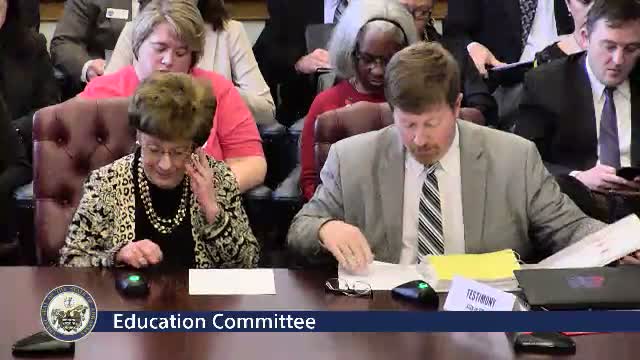
Little Rock — A broad rewrite of school fiscal-accountability rules moved into sharp focus Tuesday when members of the Senate Education Committee questioned language that could allow the state to waive teacher fair-dismissal procedures in districts declared in fiscal distress.
Sen. Jane English introduced Senate Bill 483 as a measure to tweak fiscal reporting dates, allow the Department of Education to request legislative audit for accumulating nonmaterial fiscal indicators, and align fiscal accountability procedures with Act 930 to create alternatives to full board removal during state intervention. Johnny Keith, a Department of Education official, said the bill would change the identification date for districts with two or more fiscal-distress indicators to Nov. 1 (from Aug. 31) and would authorize more structured support, including best-practice assistance for business managers.
The bill prompted sustained questioning about a provision on page 5 that removes language protecting teacher fair-dismissal rights and instead would permit waiver in certain fiscal-distress situations. Committee members and public witnesses, including Tracy Ann Nelson, executive director of the Arkansas Education Association, warned that embedding a waiver into statute risks punishing teachers and education support professionals for administrative fiscal failures and could worsen retention problems.
Commissioner Keith and ADE counsel Laurie Frino said the change reflects language previously removed from Act 930 and would give the State Board an option it currently lacks, not an instruction to use the waiver routinely. Keith said the provision would apply broadly to 'educators' (not only classroom teachers) and that the department’s intent is to provide more flexible tools and early support, not automatic termination of due process.
After extended debate and public testimony, several committee members said they could not support the bill as written. The committee recorded no final passage; members agreed to return the bill after ADE and the sponsor clarify or amend the teacher-fair-dismissal language.