Get Full Government Meeting Transcripts, Videos, & Alerts Forever!
Get email alerts on the School Discipline topic
No spam. Unsubscribe anytime.
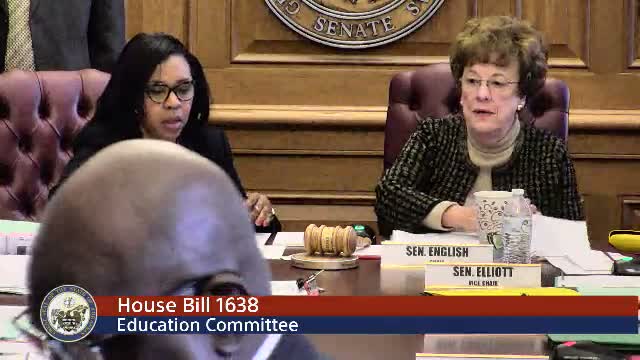
Senate committee narrows corporal‑punishment ban to exclude certain students with severe disabilities
Summary
Senator Elliott’s revised corporal‑punishment bill narrowly prohibits paddling for specified groups (nonambulatory, nonverbal, autistic, intellectually disabled) and passed after debate over definitions and safeguards.
The Senate Education Committee passed a narrowed version of a corporal‑punishment bill that prohibits physical strikes (paddling) for students who are nonambulatory, nonverbal, autistic, or have other specified severe disabilities.
Senator Elliott, sponsor of the measure, acknowledged the bill is narrower than prior proposals and said the intent is to protect students with severe disabilities while not imposing a blanket statewide prohibition. When asked about definitions, Elliott defined corporal punishment as a physical striking of a child, commonly called paddling. He said the bill excludes clearly identified students who already have designations such as IEPs for the categories listed.
Committee members debated whether the statute defines corporal punishment elsewhere and whether decision-making would be subjective; witnesses and members emphasized the excluded categories are documented and not left to an ad‑hoc teacher judgment. Senator Chesterfield and others expressed support for the narrower approach and the committee passed the bill by voice vote.
What’s next: The measure advances for additional legislative consideration; sponsors said it balances protecting vulnerable students while preserving local discretion in other cases.