Get Full Government Meeting Transcripts, Videos, & Alerts Forever!
Get email alerts on the Committee Votes topic
No spam. Unsubscribe anytime.
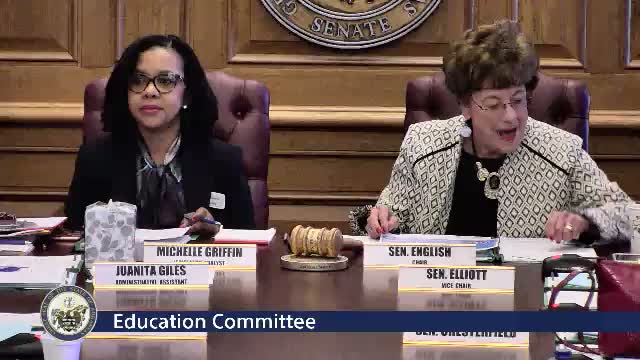
Votes at a glance: Bills approved by the Senate Education Committee
Summary
The committee approved a range of bills by voice vote covering school elections, health curriculum language, school meals policy, school safety and concurrent enrollment access for nonpublic students.
The Senate Education Committee approved multiple bills by voice vote during the session, including measures described below. Committee roll-call tallies were not recorded on the transcript; the chair announced passage by voice vote for each item.
Key items passed by the committee:
- SB 158 — School election procedural fixes (approved by voice vote). Sponsor: Senator Ballenger. - SB 233 — Transfers school-election notice duties to county boards (approved by voice vote). Sponsor: Senator Hammer. - SB 235 — Removes prohibition on school employees serving as election officials (approved by voice vote). Sponsor: Senator Hammer. - SB 304 — Healthy Arkansas Education Act (approved by voice vote after amendment). Sponsor: Senator Bond. - SB 382 — Pathway for reinstating revoked educator licenses (approved by voice vote). Sponsor: Senator Davis. - SB 383/SB 384 — Clarify charter coverage and allow funding follow for students in out-of-state residential treatment (approved by voice vote). Sponsor: Senator Davis; Senator English on SB 384. - SB 307 — Department bill clarifying the educator code of ethics applies to conduct while a license was held (approved by voice vote). Sponsor: Department of Education. - HB 1356 — School meal protections and model practices (approved by voice vote). Sponsor: House author, Senate sponsor present. - HB 1413 — Expands concurrent enrollment/foundation funding for nonpublic students taking public courses (approved by voice vote). Sponsor: Representative Lowry.
Notes: Several items included amendments adopted in committee; interested parties should consult bill text and committee clerk for final versions, fiscal notes and subsequent calendar scheduling.